The big question: Are tariffs impacting your business?
EIC members report differing tariff impacts: logistics sees rising cost, complexity and uncertainty, while others remain insulated through local sourcing and diversified model. Do tariffs ultimately disrupt growth, or create opportunity for adaptable energy supply chains?

CEO of DHL Industrial Projects
Uncertainty has arguably been the biggest challenge
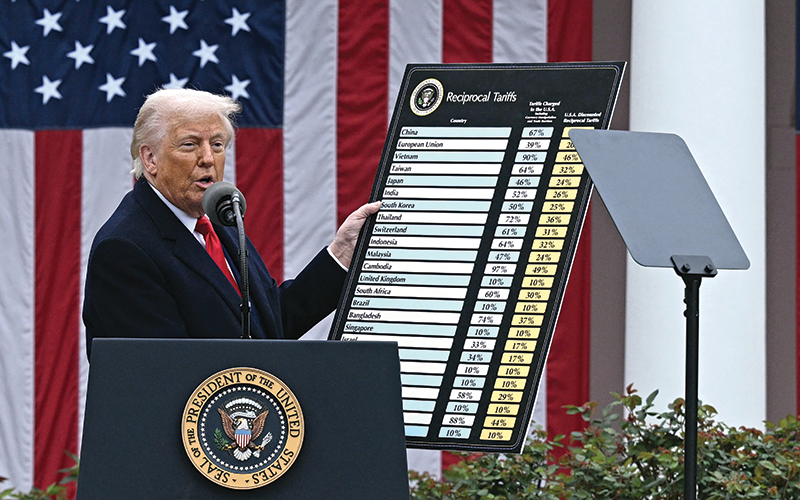
Tariffs are having a significant effect on the global supply chain, although this is more multilayered and nuanced than many in the market might have predicted before they came into effect.
Their short-term effect has been to add cost, complexity and uncertainty to trade. Cost and complexity have been easier to manage – for logistics companies, they have even been a demand driver, as customers have turned to our industry for expertise, support with operational efficiencies and creative solutions such as alternative routes and transport modes to mitigate them. Uncertainty has arguably been the biggest challenge, as this has dampened investment appetite, delayed projects and created less predictable flows of materials.
We see tariffs reshaping international trade relationships and we expect this trend to continue over the long term, with significant implications for the legacy energy and renewables sectors. Regions such as the Middle East, Latin America and South East Asia, in particular, are showing early indications that they will benefit from these trade shifts, while major economies such as the US are leaning towards increased domestic production of strategically critical goods. This brings opportunity for those businesses that can adapt their supply chains to respond quickly and capitalise.
About DHL Industrial Projects
DHL Industrial Projects provides safe, compliant and reliable project logistics management for oversized cargo and heavy lifts, as well as deep-sea chartering activity. It is a unit of DHL Global Forwarding, which has around 30,000 employees in over 190 countries and territories.

Financial Director at Powertherm
Tariffs have not had a major effect on Powertherm’s day-to-day operations. As most of the materials and services we use are sourced within the UK, we are largely shielded from changes in import duties and tariff-related costs. This has significantly reduced our exposure to cost pressures during periods of wider market uncertainty.
However, changes in energy prices do affect the environment in which our clients operate. When costs rise or fluctuate, asset owners naturally place more focus on efficiency, cost-effectiveness and certainty around delivery. This influences how work is planned and prioritised across industrial energy sites.
As most of the materials and services we use are sourced within the UK, we are largely shielded
For us, this reinforces the importance of practical, efficiency-led solutions. Our work helps reduce energy losses, improve thermal performance and protect critical assets – all of which support lower operating costs and more reliable performance over time.
In the context of bankable energies, our focus is on ensuring energy infrastructure works better and lasts longer. Clear and stable cost frameworks support better planning across the sector, yet regardless of wider market conditions, demand for reliable partners and well-executed technical industrial insulation remains consistent.
About Powertherm
Powertherm Contract Services Ltd is an industrial service provider offering solutions including insulation, scaffolding, trace heating and protective coatings. With over 35 years’ experience, it helps clients focus on reliable, practical solutions in demanding environments.

Sales Director at S3 ID
Tariffs are not currently affecting our business in any material way. Our supply chain and commercial model have been structured to minimise tariff-related risks, supported by proactive steps taken over several years to diversify our sourcing, manufacturing and logistics routes. This strategic approach ensures we maintain flexibility and resilience whenever global trade conditions change.
Where tariffs do apply, their effect has been marginal and fully manageable within our existing cost structures. We work closely with partners to optimise import routes and local assembly options, ensuring continuity of supply without disruption. Consequently, we have not needed to pass costs on to clients, nor have we experienced delays in project deployment.
Our supply chain and commercial model are structured to minimise tariff-related risks
Furthermore, a significant proportion of our value is derived from system design, software, integration and ongoing support rather than purely from hardware components. This reduces our sensitivity to tariffs on individual items, while our geographically diverse customer base helps balance regional trade variations.

In summary, while we continue to monitor global trade policies closely, they have not negatively affected our operations, pricing or ability to deliver projects reliably and on schedule.
About S3 ID
S3 ID delivers advanced personnel-on-board tracking, mustering and access control solutions for safety-critical industries. Combining robust hardware and intelligent software, it provides real-time on-site visibility of people, improving safety, operational efficiency and emergency response.
Image credit | Getty

Follow us
Advertise
Free e-Newsletter