The power behind AI: securing energy for the data-driven era
As AI and data centre growth accelerate, the race is on to secure reliable and sustainable power while balancing cost, environmental impact and technological innovation. From natural gas expansions and massive solar projects to nuclear small modular reactors, the global energy sector is adapting to fuel the data-driven age By Neil Golding, director of market intelligence, eic uk
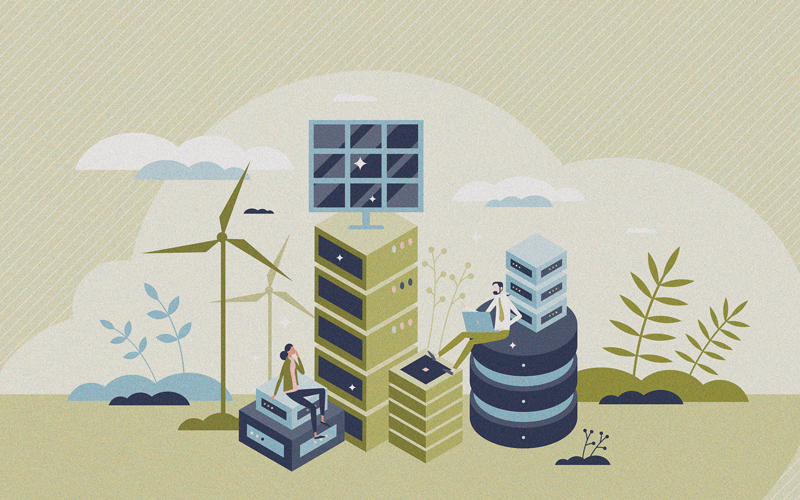
Soaring global demand for data generation is driving unprecedented growth in electricity consumption. Data centres, the backbone of the digital world, are consuming more power than ever before, with AI at the core of the surge. The International Energy Agency projects that data centres will account for approximately 10% of global electricity demand growth by 2030.
Growth is global, but the pace will vary by country and region. The US, Western Europe and ASEAN countries are expected to see the sharpest increases in data centre-related electricity consumption as digital services expand rapidly.
Building reliable power infrastructure
Data centres run continuously – 24 hours a day, seven days a week – so they require reliable baseload power, supported by robust infrastructure. While current grids have generally managed to support expansion, the next wave of data demand will require targeted upgrades to ensure resilience and reliability. Energy planners are increasingly recognising the need to future-proof infrastructure to accommodate AI-driven workloads and the ongoing digital transformation.
In the US, rising demand for natural gas-fired power generation is prompting renewed investment in natural gas infrastructure, aiming to boost supply and support emerging power generation facilities. Instead of constructing entirely new pipelines to boost capacity, operators are focusing on expanding existing systems. One notable example is TC Energy’s ANR Northwoods Pipeline Expansion, a US$900m development that will increase capacity by 400m cubic feet of gas per day. The project aims to serve natural gas-fired power plants and data centres across the Midwest.
Powering investor confidence
Offtake agreements give developers the financial certainty needed to invest in large-scale energy projects – and data centres are increasingly becoming the most reliable offtakers. Their consistent, long-term electricity demand gives developers confidence that their power will find a steady buyer.
Competition for clean power is intensifying across several industries, but the certainty of demand from data centres is causing renewable project developers to change offtaker channels. A prime example of this can be seen in the UAE. In January 2025, Masdar announced plans for a 5.2GW Solar PV project in Al Azeezah, Abu Dhabi, combined with a 19GWh battery energy storage system to support green ammonia production. However, in August 2025, Masdar revealed that the project’s output would instead power data centres, given the current lack of demand for green hydrogen.
Case study

Delivering future-ready data centres
By Jason Martin, Global Managing Director, Clean Energy and Transmission, Turner & Townsend
AI is transforming the data centre landscape, driving demand for high-density, liquid-cooled, power-intensive facilities. These centres require delivery models that balance speed, cost and resilience. To meet this demand, our global experts are enabling faster deployment through modular construction and phased execution. However, infrastructure and supply chain readiness remain critical challenges.
Energy access is a major constraint. We are working with transmission system operators to reform connection processes and advance work programmes to increase system capacity. Similarly, we are working with utilities and developers to procure and deliver new sources of electricity generation that can support the grid or provide direct power to major customers.
Material shortages, labour constraints and evolving sustainability requirements also add complexity. Our embedded procurement strategies and market intelligence are securing value-driven supply chains.
We’re working with clients to anticipate regulatory bottlenecks and build agility into delivery models.
Powering AI infrastructure is not just technical – it’s strategic. Success depends on adapting to shifting constraints and opportunities. We’re proud to help our clients achieve predictable outcomes that deliver sustainable, secure and affordable energy solutions.
Tech giants go green
Many data centre developers are turning to renewable energy to power their facilities and meet their sustainability commitments. Meta stands out as a leader, signing long-term power purchase agreements with clean energy power producers. Most of these projects are solar PV developments in the US, but Meta is expanding its renewable footprint in other global markets that are experiencing data centre growth. In Singapore, Sembcorp Solar Singapore Pte Ltd, entered into a 25-year agreement with Malkoha Pte Ltd, a subsidiary of Meta Platforms Inc., to develop a 150MWp floating solar project on Kranji Reservoir. Under the deal, Sembcorp will build, own and operate the project, supplying renewable energy to support Meta’s regional operations, including its Singapore data centre.
The International Energy Agency projects that data centres will account for approximately 10% of global electricity demand growth by 2030
Nuclear steps in
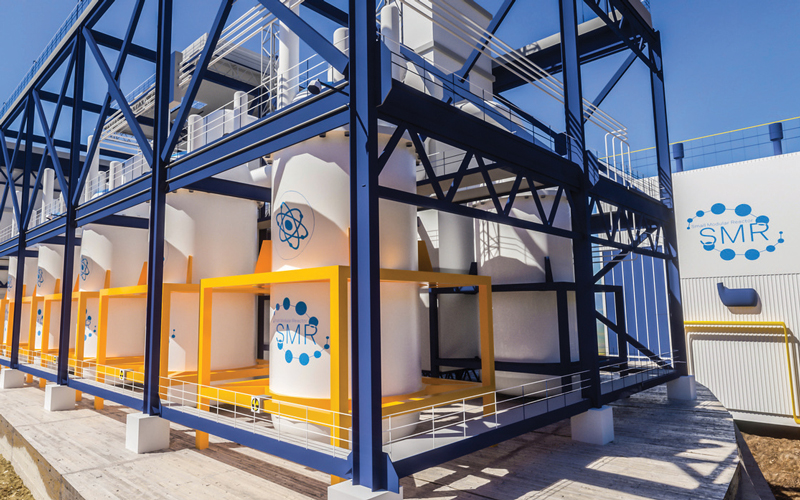
As data centres’ power requirements rise, new technologies are gaining momentum – and small modular nuclear reactors (SMRs) are among the most promising. SMRs offer reliable, low-carbon, consistent baseload power and are scalable enough to match large data facilities’ needs. As such, various deals and partnerships have been made to use SMRs to power data centres.
In September 2025, under the Atlantic Partnership for Advanced Nuclear Energy, Holtec, EDF and Tritax announced their intent to work together to develop two of Holtec’s SMR-300 reactors at the former Cottam coal-fired power station in Nottinghamshire. The reactors will provide 650MW of baseload capacity to power a 1GW data centre that is expected to come online by 2030.
The future of data infrastructure will be built on diversified, resilient and forward-thinking energy solutions
Case study

Smarter, faster steel solutions
By Tom Pashley, Chief Commercial Officer, Unger Steel Fabrication FZE
Unger Steel is responding to global data centre demand with a strategy that combines proactive planning, intelligent design and effective local compliance management.
As many data centres share standardised structural designs, we pre-purchase raw materials in bulk, reducing exposure to steel price volatility and supply chain disruptions. Through value engineering, we develop modular, pre-assembled structural assemblies that enable faster, safer installation and lower on-site labour costs. Third parties can often pre-install equipment to the modules before installation to further reduce time spent on-site.
Painting and fireproofing are completed in-house before shipment, minimising environmental exposure and reducing time and cost at the job site. Most data centre projects have limited laydown areas, so Unger Steel ensures each delivery is sequenced precisely to match site activities, streamlining logistics and eliminating unnecessary material handling.
In a sector governed by stringent environmental, safety and permitting regulations, our experts engage early in the pre-qualification process to ensure full compliance. By partnering with domestic firms in the country of construction, we effectively manage regulatory and financial risks, including potential import tariffs.
This integrated approach allows us to deliver data centre projects faster, more safely and more economically, supporting global expansion of AI infrastructure with reliability and innovation.
Blending energy solutions
Many data centre developments will rely on a mix of grid connections and one or two complementary energy sources to power the facilities. However, the scale of some project proposals is prompting developers to use a fully integrated approach that combines multiple generation technologies.
In June 2025, Texas Tech University System announced a collaboration with Fermi America to develop a landmark 11GW data centre campus near Amarillo. The facility, requiring tens of billions of dollars of investment, will use combined cycle gas power generation, utility grid power, solar, onshore wind, battery energy storage systems and a new 4GW nuclear power plant. This ambitious project has already seen agreements signed with Siemens Energy, which will provide up to 1.1GW of gas turbines, and with Westinghouse, which will contribute AP1000 reactors. Fermi has also signed agreements with Energy Transfer to connect its pipeline infrastructure, located to the south of the planned campus.
The road ahead
After all the above talk of data centres, it would be remiss of me not to use AI to help with my closing remarks. As the digital age accelerates, the demand for reliable and sustainable energy to power data centres will continue to reshape global energy strategies. From natural gas expansion and long-term renewable agreements to the emergence of nuclear SMRs, the energy mix is evolving to meet the sector’s unique needs. With large-scale projects such as those in Texas and Nottinghamshire leading the way, it is clear that the future of data infrastructure will be built on diversified, resilient and forward-thinking energy solutions. The challenge now lies in scaling these efforts to keep pace with demand – sustainably, securely, and globally.
Are you ready to explore data centre opportunities? Email: neil.golding@the-eic.com
Image credit | iStock


Follow us
Advertise
Free e-Newsletter