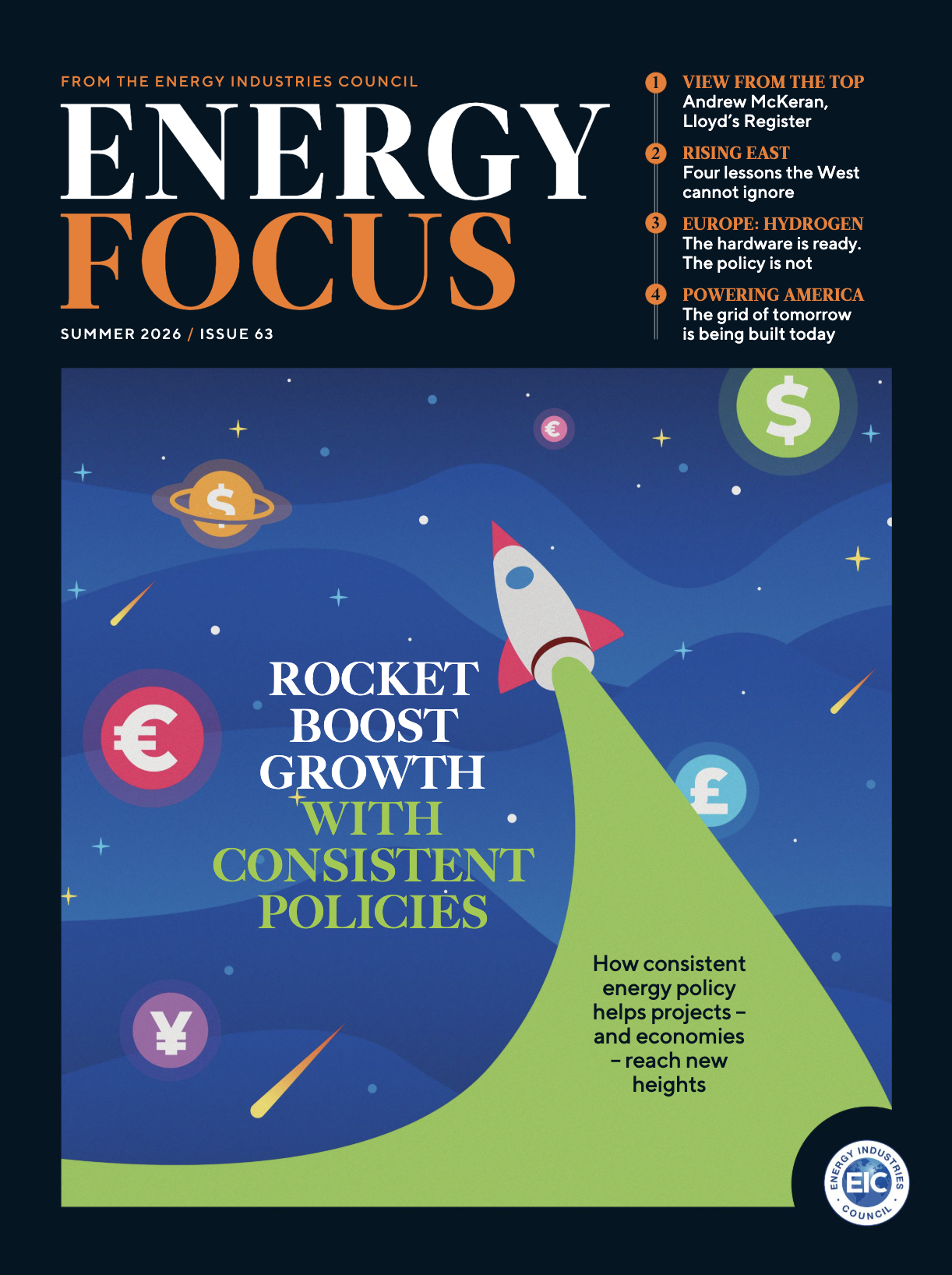
View from the top: Andrew McKeran, Chief Growth Officer at Lloyd's Register
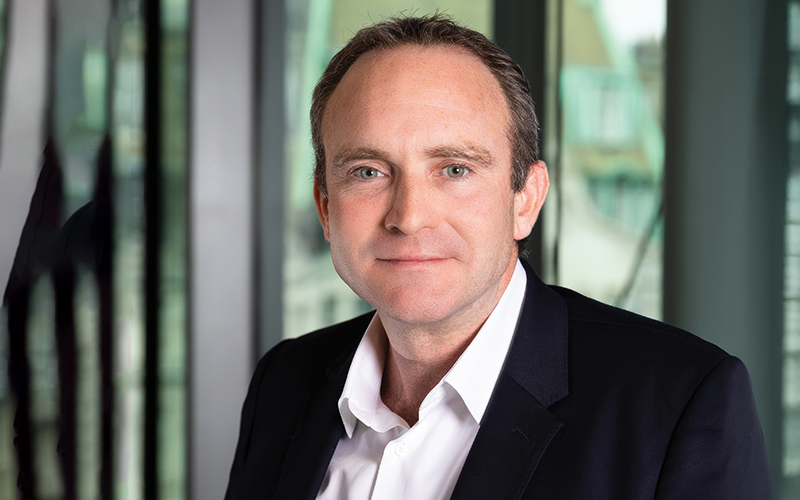
Andrew McKeran, Chief Growth Officer at Lloyd’s Register, talks to Energy Focus about engineering trust, navigating the energy transition and why responsible growth must underpin every step of the journey Ahead.
What is the core purpose and vision of Lloyd’s Register?
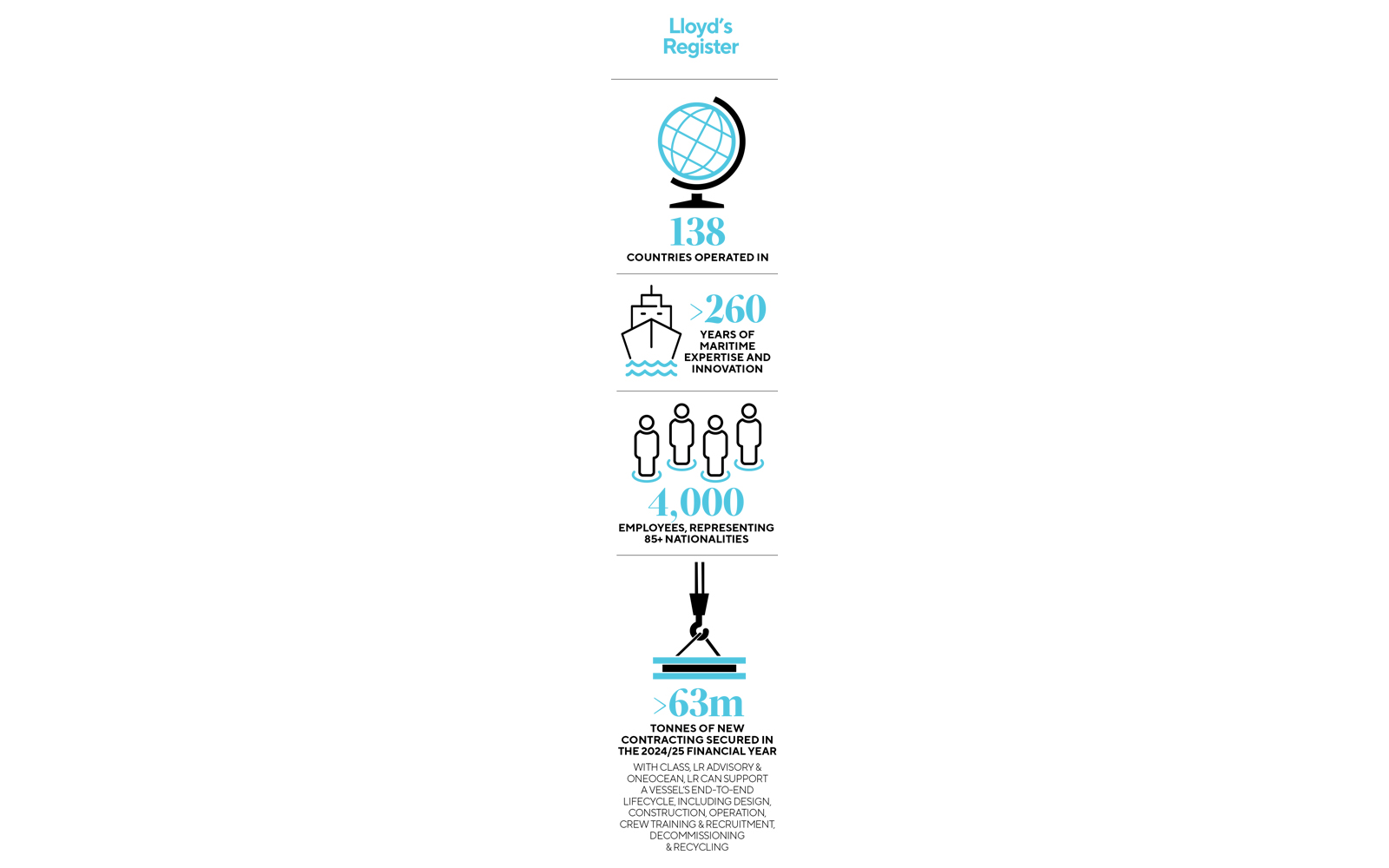
Lloyd’s Register (LR) is dedicated to engineering a safer world by helping industry to manage risk, assure performance and make better decisions across increasingly complex systems. That purpose has remained consistent since 1760, even as the technologies, markets and risks have changed profoundly.
Today, that vision is expressed through LR’s role as a trusted adviser across maritime, energy and related industrial sectors, combining deep technical assurance, digital capability and advisory insight to support safety, sustainability and commercial resilience across the asset lifecycle. Whether we are assuring complex assets, supporting offshore and onshore energy projects or enabling digital compliance, our focus is on helping clients operate safely while navigating change with confidence.
Importantly, LR’s vision acknowledges that true safety and sustainability are inseparable, and that sustainability extends beyond environmental concerns. For projects and operations to thrive, they must be economically viable and socially responsible. The transition to new fuels, digital systems and autonomous technologies will only succeed if underpinned by rigorous engineering, transparent data and trusted standards. That is why LR invests heavily in industry-first guidance, applied research and collaborative frameworks that help turn ambition into practical, scalable solutions.
How important is LR’s 260-year legacy of curiosity as you look to the future?
LR’s 260-year legacy is not a historical footnote – it is a strategic advantage. Since its founding in 1760, LR has repeatedly adapted by listening closely to clients, understanding emerging risks and developing solutions before they are demanded by regulation or markets. That mindset is exactly what the energy transition requires today.
These industries are entering a period where there are no simple answers: multiple technology pathways, fragmented regulation, digital disruption and capital uncertainty all coexist. LR’s heritage allows us to operate in that ambiguity. We are comfortable asking difficult questions early, whether that is about safety, infrastructure readiness, digital interoperability or skills gaps, because our role has always been to protect life, assets and the environment under changing conditions. LR’s ability to combine historical perspective with forward-looking engineering judgment allows clients to move faster without taking unacceptable risk.
How does ownership by the Lloyd’s Register Foundation affect decision-making, vision and investment?
Being wholly owned by the Lloyd’s Register Foundation fundamentally shapes how LR thinks, decides and invests. The Foundation is an independent charity with a mission to engineer a safer world, giving LR a unique strategic horizon compared with shareholder-driven organisations. The Foundation reinvests profits from LR’s commercial activities into research, education and applied insight that benefits industry and society. This includes funding work on maritime decarbonisation, skills, safety systems and emerging risk.
Foundation ownership reinforces independence and trust. LR is not incentivised to promote a single technology or geography. Instead, we focus on helping clients navigate uncertainty objectively, whether that’s validating new concepts, highlighting constraints or challenging assumptions when evidence demands it. In investment terms, the structure enables sustained commitment to areas such as digital platforms, alternative fuels assurance and skills development. This allows LR to act as a system steward, not just a service provider, to support safer, more sustainable outcomes.
What opportunities and challenges do you see as Chief Growth Officer?
The opportunity is to help clients connect compliance, performance and sustainability into a single, coherent operating model. Too often, these have been treated as separate challenges, when in reality they are deeply interdependent.
The scale of opportunity is significant: energy clients are navigating new fuels, digital regulation, geopolitical risk and rising capital pressure simultaneously. LR’s combination of technical assurance and advisory capability positions us uniquely to support decision-making across the whole lifecycle, from concept and design through operation and optimisation.
The challenge is pace and integration. Regulation is evolving unevenly, technology maturity varies and the industry’s digital baseline is inconsistent. Growth must be responsible – scaling solutions that are trusted, interoperable and aligned with real operational constraints. The role is ultimately about helping the industry to move faster, without compromising safety or credibility, during one of the most complex transitions it has ever faced.
What targets have you been tasked with achieving in the next three to five years?
Growth is defined by our ability to help the energy and related industrial sectors navigate transition safely, competitively and at scale. Priorities include accelerating the adoption of integrated digital and advisory solutions to help clients manage regulatory complexity, emissions exposure and operational performance in one framework.
Finally, there is a strong people dimension. The industry faces a growing skills gap as systems become more complex. Ensuring that digitalisation and decarbonisation are matched by workforce readiness, through training, guidance and human-centred design, is essential to deliver sustainable growth rather than create new risk.
How is LR embracing change such as artificial intelligence (AI), tariffs, energy security and net-zero delays?
AI, trade friction, energy security concerns and delayed net-zero action all interact, and clients must manage their combined effect. On digital and AI, LR is focused on decision support rather than automation for its own sake. AI and analytics are applied to areas where they add tangible value: emissions forecasting, risk modelling, compliance planning and operational optimisation are always grounded in verified data and human oversight. Specifically, LR is exploring how AI can generate deeper insights from the data we already hold from the thousands of engineering reviews and asset surveys we complete each year. The aim is to provide benchmarking and trend insight that helps clients to strengthen their processes, improve performance and reduce risk.
As a trusted independent organisation, we also see an opportunity to extend these benefits by applying similar techniques to client data sets (where appropriate and agreed). By combining operational and engineering data, we can help to identify the drivers of asset performance and leading indicators that support earlier intervention and better outcomes.
Energy security and geopolitical uncertainty have reinforced the need for optionality and resilience. LR supports this by assuring multiple technology pathways, validating emerging solutions and helping clients to stress test strategies against regulatory and market scenarios.
Regulatory uncertainty increases risk, capital hesitancy and technology lock-in. By providing independent assurance, scenario analysis and evidence-based guidance, LR helps clients to move forward without overcommitting too early or standing still for too long.
How important are consistent policy frameworks?
Consistent policy frameworks are crucial to enable certainty and confidence across the maritime, energy and industrial sectors. Clear, predictable policy allows organisations to plan, invest and innovate with assurance that their efforts will be aligned with regulatory expectations.
For LR, consistency in policy provides the foundation for our independent assurance and technical advisory services. It enables us to support clients in navigating regulatory complexity objectively, and helps to create an environment where industry and regulators can collaborate on solutions that are safe, scalable and sustainable. In practice, this means clients can move forward confidently, knowing that their investments are grounded in a stable regulatory context rather than shifting requirements or unforeseen constraints.
At the Top: Andrew McKeran
Andrew McKeran was appointed Chief Growth Officer at Lloyd’s Register (LR) in September 2025, a role that also encompasses the role of Managing Director at OneOcean. Responsible for driving growth across class, LR Advisory and OneOcean, he previously served as Chief Commercial Officer. Andrew joined LR in 2019, bringing more than 25 years of experience across the marine, offshore and naval sectors, spanning shipyard commissioning, project management and global business leadership roles with Cegelec, Alstom, Converteam and GE.
Why is LR diversifying beyond maritime?
LR’s expansion into energy and adjacent sectors is a natural evolution, building on more than 60 years of operational experience in this field. The same capabilities that underpin safe, reliable operations – systems engineering, risk management, assurance and lifecycle thinking – are increasingly critical across offshore energy, renewables and complex infrastructure. Our long-standing experience helps us to address the evolving needs of these sectors with confidence and proven expertise.
As the energy system decarbonises, the boundaries between energy production, distribution and enabling infrastructure are dissolving. Floating wind, alternative energy carriers, grid and port infrastructure and digital systems form a connected ecosystem. LR’s diversification allows us to support that system holistically. Key steps include targeted investment in energy assurance, digital platforms such as OneOcean, and advisory capability that connects technical insight with commercial reality. The objective is coherence, to help clients manage interconnected risks across sectors safely and efficiently.
A message for governments, partners and future talent?
The future will reward those who build trust, capability and collaboration early. Governments must provide clear, consistent frameworks that enable long-term investment. Industry partners must share risk, data and learning to scale solutions safely. And the next generation should see the energy and industrial sectors not as legacy industries, but as places where engineering, digital innovation and sustainability intersect with global impact.
The transition ahead is complex, but it is also an opportunity to build systems that are safer, cleaner and more resilient than anything before. Those who engage early, think systemically and act collaboratively will shape that future.


Follow us
Advertise
Free e-Newsletter