View from the top: Julya Pyke, former Sizewell C joint Managing Director and Clean Power Comissioner
Former Sizewell C Joint Managing Director and Clean Power Commissioner Julia Pyke speaks to Energy Focus about financing new nuclear, cutting costs and strengthening UK energy security.
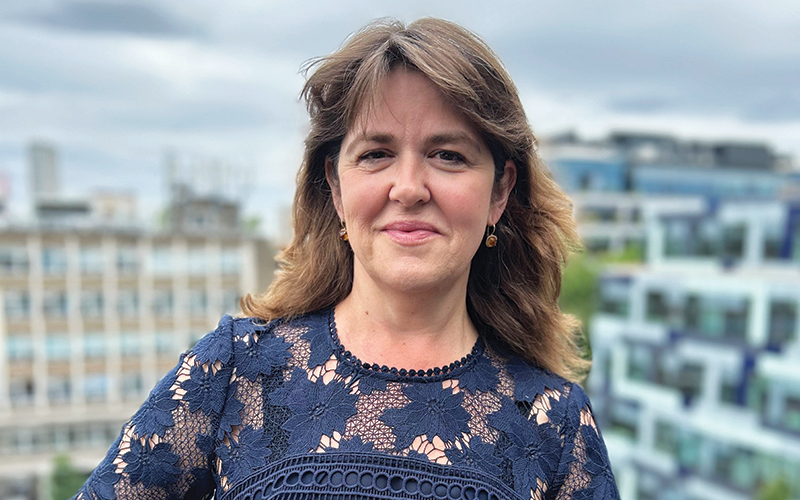
How does the ownership of Sizewell C differ from that of the UK’s previous large nuclear project, Hinkley Point C?
Hinkley Point C (HPC) is owned by EDF (66.5%) and CGN (33.5%) and is financed without company-specific project debt. Sizewell C has a different ownership and financing model: it is structured to attract private capital through a regulated asset base (RAB) model that shares construction risk between investors and consumers (cost overrun risk is 50/50), making it investable as a long-term, stable infrastructure asset that delivers energy security, social value and lower costs once operational.
Following financial close in November 2025, the shareholders are La Caisse (20%), Centrica (15%), Amber Infrastructure (7%), EDF (12.5%) and the UK government, which holds the remaining stake. The UK government also retains a special share focused on national security.
At the Top:
Julia Pyke
Julia Pyke became a Clean Power Commissioner at the Department for Energy Security and Net Zero in January 2026, having served as Joint Managing Director of Sizewell C, Britain’s largest nuclear project.
Before joining Sizewell C in 2017, Julia was Head of Power & Renewables for the UK, US and Europe at Herbert Smith Freehills LLP, advising on major power projects across defence, nuclear decommissioning and transport.
She is a Fellow of the Energy Institute and an Honorary Fellow of the Nuclear Institute.
What drove the shift to this new ownership and funding model, and why was such a significant change necessary?
The shift in ownership reflects renewed confidence in nuclear as an investable asset class and the fact that EDF did not wish to fund a second UK nuclear power station alone. The funding model also changed in response to lessons from HPC. The RAB model, long used for electricity transmission and distribution, was identified by the National Audit Office as a viable option for nuclear generation.
The Contract for Difference (CfD) model, while successful for some renewables, proved unsuitable for new nuclear beyond HPC. Investors were unwilling to commit to long development and construction periods with no return on capital, and the risk allocation did not reflect the shared nature of UK-specific risks. Crucially, raising significant levels of debt required a funding model capable of supporting an investment-grade credit rating. In the context of new nuclear build, the RAB model met that requirement; it is doubtful that a CfD model could have done so.
Costs must fall if nuclear is to keep its place in the energy mix, and that will require real cultural change
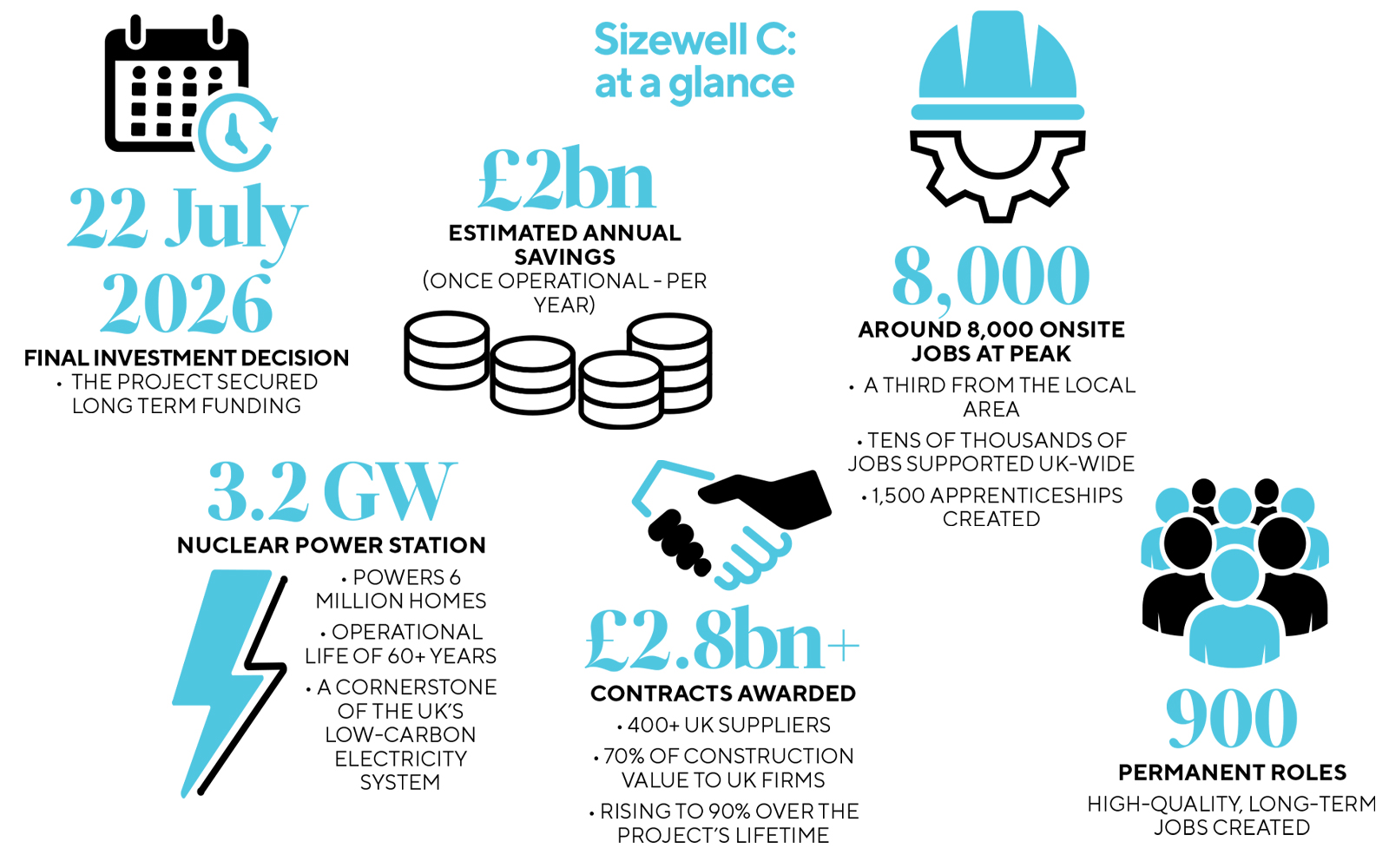
Government analysis suggests that a contribution of around £1 per household per month during construction could deliver £2bn a year in savings across the UK electricity system. Where will this value be realised?
The £2bn annual saving is expected to be realised primarily through lower electricity bills for consumers. Beyond this, Sizewell will generate wider economic value due to its very high UK content – around 90% over its lifetime – resulting in substantial tax revenues, broadly equivalent to the construction cost, and significant employment and supply chain benefits for UK businesses. In addition, because the UK government is both a shareholder and a lender, UK citizens will benefit directly from shareholder returns and from interest paid on the project’s debt.
British businesses are set to benefit from 70% of construction spend – which technologies and supply chains are more likely to come from imports?
The nuclear island equipment and turbines will be imported, as the UK has not maintained the forging and manufacturing capabilities seen in other countries. This could change, and it is encouraging to see investment in Sheffield Forgemasters. A significant challenge for future projects will be onshoring the manufacturing of complex, critical components and building on the supply chain revival beginning with HPC and continued by Sizewell.
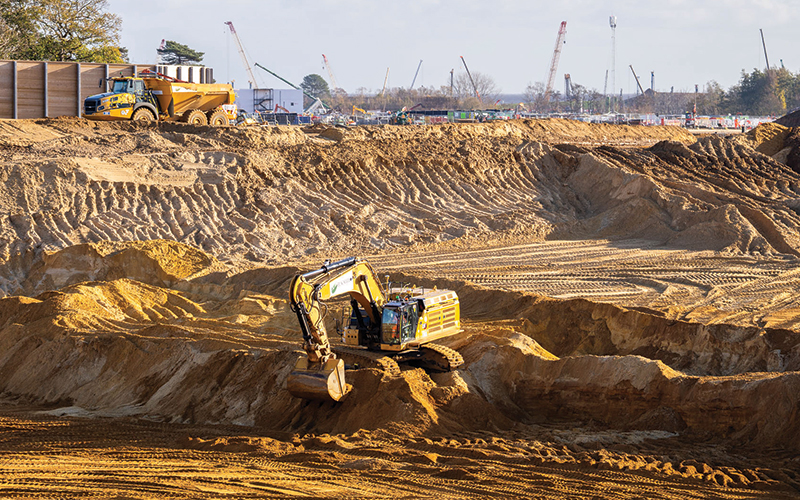
The case for Sizewell C is first and foremost about energy security, with the added benefit of delivering large volumes of low-carbon power that will lower bills
What skills and supply chain opportunities does Sizewell C create, and where do you anticipate the greatest challenges?
Sizewell C creates construction skills, which will be useful for the nuclear programme beyond Sizewell and for other infrastructure, having of course benefited from the investment into skills made by HPC. Sizewell also maintains and builds the nuclear-specific skills that need to be grown to support a revival.
There are thousands of supply chain opportunities, from manufacturing through catering to occupational health. The project will support tens of thousands of UK jobs and create 1,500 apprenticeships. A recent Oxford Economics Report found that Sizewell C will provide an average of just under 9,000 direct and indirect jobs a year during the construction period. In operation, there’ll be 900 high-skilled, well-paid jobs, and hundreds more in outage maintenance, which will be continuous work because there will be three units (Sizewell B and two at C) each on outage every 18 months.
With a final investment decision reached in 2025 and a projected capital cost of around £38bn (2024 prices), what do you see as the main risks and challenges to delivering Sizewell C on time and on budget?
There are always risks from events during long construction projects, but the issues go beyond that. In his 2025 Nuclear Regulatory Review report, John Fingleton highlighted that one of the biggest challenges is the high cost of UK nuclear projects. Addressing this requires a focus on innovation and a shift in the way that development companies, suppliers and regulators work together, because much of the current approach is rooted in practices built up over many years. Ultimately, the key is ensuring that costs are proportionate and fair for consumers.
What are the major delivery milestones for Sizewell C, and when do you expect the project to produce first power?
Sizewell C is aiming for first power in the second half of the 2030s. The ambition is to deliver as early as possible, recognising the UK’s growing need for reliable low-carbon electricity as electrification accelerates, datacentre demand rises and older-generation assets retire.
Between now and then, major milestones will include reaching ‘J0’, when construction moves above ground, the lifting of the two reactor building domes, and the arrival and installation of the reactor pressure vessels. Similar moments at HPC have already shown the remarkable engineering and teamwork involved.
Do you see signs of a global nuclear renaissance, and what is driving the renewed interest?
There are definitely signs of a global revival, with momentum building across Europe, the US, China, Russia and the Middle East. In Europe, attitudes have shifted as it’s become clearer how to deliver a low-carbon power system that stays affordable and continues to underpin industrial economies. Nuclear’s contribution – strengthening energy security, diversifying supply and offering the potential for low-carbon heat – is now widely recognised. Its inclusion in the EU Taxonomy, along with commercial banks’ willingness to finance Sizewell C, shows just how far that renewed confidence has come.
Do you expect large-scale nuclear to retain its role, or could nascent technologies, such as small modular reactors, advanced modular reactors or fusion, dominate in future decades?
Large-scale nuclear will continue to play a central role in countries with strong, established grids. It is the proven technology, and with a sustained new-build programme that enables real learning and gives the supply chain continuous work, alongside a renewed focus on cost discipline, its future is very strong. Small and advanced modular reactors and fusion, have exciting potential, too, and in time they can become powerful additions to the wider low-carbon technology mix.
Is ‘net zero’ an unhelpful term, and should we shift toward more meaningful expressions such as energy decarbonisation or energy security?
The case for Sizewell C is first and foremost about energy security, with the added benefit of delivering large volumes of low-carbon power that will lower bills when the station is generating. But having nuclear in the energy mix brings wider advantages, too: high UK content, strong tax revenues and long-term skilled jobs that support both national growth and local prosperity.
For me, ensuring meaningful local benefit has been a priority. Employing people from the surrounding area reduces project costs and creates well paid, lasting careers that allow young people to stay and build their futures where they grew up. The industry also has a strong record of environmental stewardship. At Sizewell C, we’ve already created new nature reserves for people to enjoy, and expect some areas to qualify for Site of Special Scientific Interest status – something I’m particularly proud of.
As we watch the US switching further from energy security to energy sovereignty, do you see that as a valid direction of travel for European countries, too?
Europe already has a very connected electricity system, with high levels of import and export between member states. I think that is likely to continue, but countries will also have more focus on domestic supply.
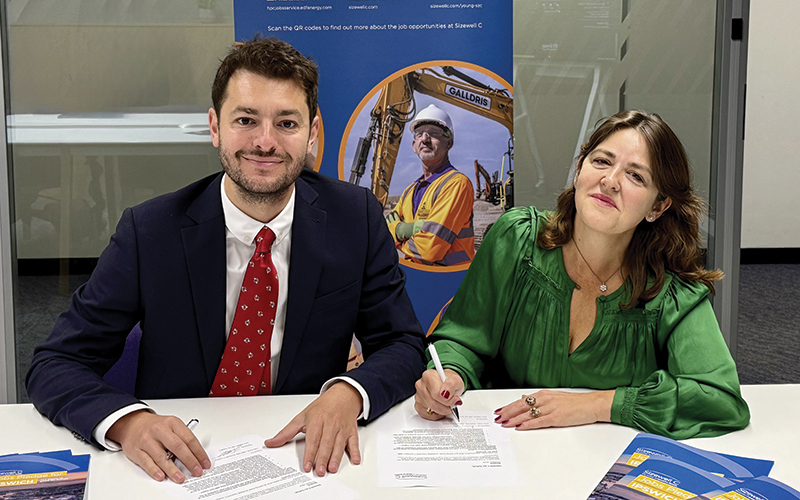
As a successful senior woman leader in energy, what lessons or insights would you share with those aspiring to follow a similar path?
Belief in what I am doing has been core – not only the conviction that energy production is essential to our lives, but that the way we produce it must genuinely serve the society around us. As choices about technologies and the balance of the energy system have become increasingly politicised, it’s more important than ever for energy companies to be deeply rooted in the communities they support. The stronger that connection, the more stable public attitudes – and, ultimately, politics – will be.
As you prepare to leave Sizewell C, what lessons stand out from your time in the nuclear sector, and what comes next?
I’ve learned a great deal from my time on HPC and Sizewell C. Above all, optimism and belief matter, as does inspiring teams rather than directing them. Strong community relationships are essential – both within the project and with the people living around it – because acknowledging impacts and delivering real local benefits is not only right but cost effective. And nuclear must always be seen as part of a wider system, coordinated to maximise value.
The UK nuclear sector is full of talented, committed people, but costs must fall if nuclear is to keep its place in the energy mix, and that will require real cultural change.
For me, the next steps include becoming a Clean Power Commissioner for the Department for Energy Security and Net Zero, joining the Studsvik board and working with Nigel Cann to set up a Community Interest Company to deliver Sizewell C’s promised social benefits. For the project itself, the focus is meeting its 2026 construction and manufacturing milestones and staying on time and on budget.



Follow us
Advertise
Free e-Newsletter