View from the top: Miranda Hochberg, Vice President, Transformation of Industry Communications, Siemens Energy
Miranda Hochberg at Siemens Energy talks to Energy Focus about driving the transformation of industry, the role of technology and collaboration in decarbonisation, and how Siemens Energy is helping customers navigate a rapidly changing energy landscape.
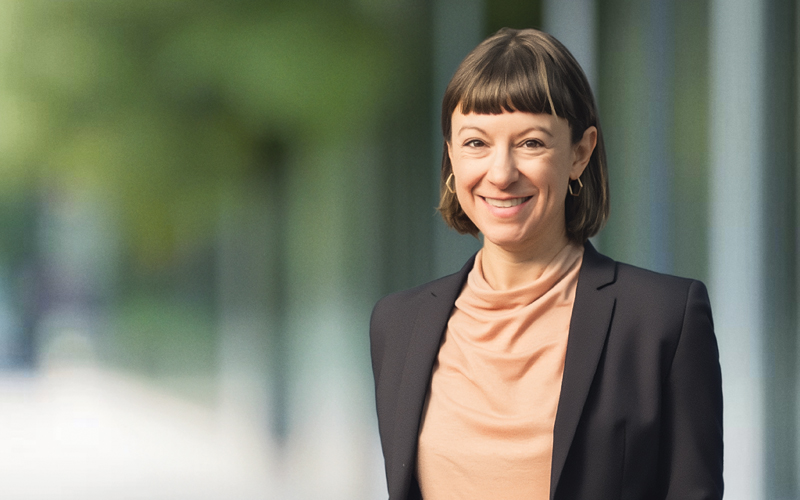
At the Top: Miranda Hochberg
Miranda Hochberg is Vice President of Communications for the Transformation of Industry at Siemens Energy. She has extensive experience in international development, governmental relations, and communications in both public and private sectors.
In her current role, she works closely with the Board and other senior executives to position Siemens Energy as a thought leader and partner for the energy transition. Previously, Miranda worked for non-governmental and government organisations in post-conflict countries, including the Balkan States and Sri Lanka. She holds a degree in international law.
What does ‘transformation of industry’ mean to you personally, and how do you see Siemens Energy’s role in helping customers navigate the transition?
For me, transformation of industry means helping industries get ready for the energy transition – not just reacting to change, but shaping it. It’s something that affects all of us: how we power homes, how goods are made and how economies stay strong. Turning big ambitions into practical steps is what matters most.
At Siemens Energy, we work with customers to make that happen. That could mean helping a paper mill in Brazil eliminate fossil fuels, supporting data centres to run more efficiently, or scaling electrolyser production for green hydrogen. Our role is to help industries cut emissions without losing reliability or competitiveness. And that’s not just about technology – it’s about experience, insight and long-term partnership.
Siemens Energy works across oil and gas, nuclear, renewables and emerging technologies. In your role, how do you convey the importance of all these technologies working together to create a reliable, sustainable and low-carbon energy future?
The energy transition isn’t about picking winners – it’s about making different technologies work together. In communications, we focus on showing how each piece fits into the bigger picture.
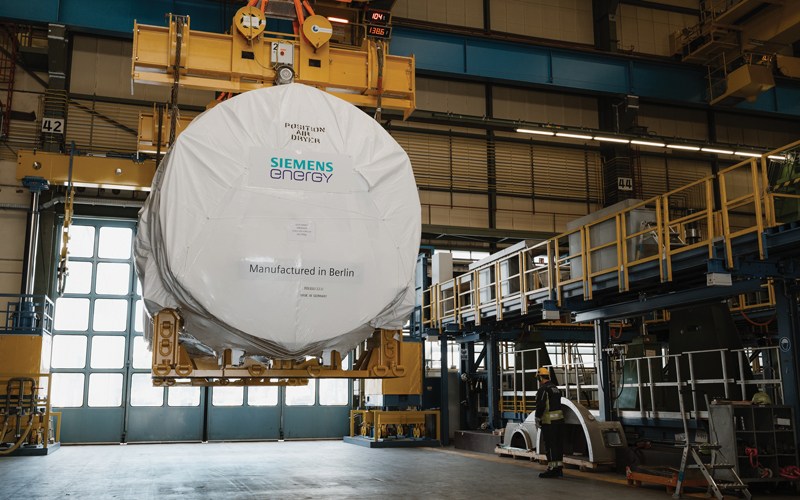
We start by acknowledging complexity. Different regions and industries face different challenges, and no single solution works everywhere. That’s why we talk about the value of a balanced mix. Combined heat and power systems can boost efficiency in industrial sites, while hydrogen production partnerships are beginning to scale up infrastructure. For example, together with Air Liquide we have launched an electrolyser factory in Berlin that is now producing at 1GW capacity. This facility will supply key projects such as the 200MW Normand’Hy electrolyser in France, which is expected to reduce CO₂ emissions by 250,000 tonnes annually.
Digitalisation and automation are part of the story, too. They make systems smarter, whether it’s modernising older infrastructure, integrating renewables into grids or using AI to optimise operations. Our job is to demonstrate how these technologies, working together, deliver real-world impact for our customers.
The energy transition isn’t about picking winners – it’s about making different technologies work together
How quickly is automation becoming a major opportunity for your business, both within your operations and for developing and selling technology to your clients?
Automation is becoming central to how we work and what we offer. Inside Siemens Energy, it helps us simplify processes, cut down on manual tasks and make better decisions. Predictive maintenance and automated data analysis are already improving speed and transparency.
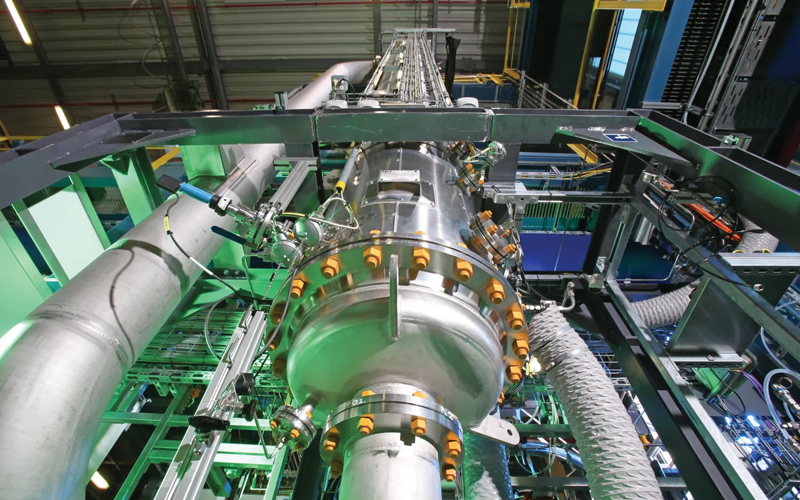
A great example is our gigawatt electrolyser factory; automation is one of its key features. It allows us to produce electrolysers at gigawatt scale, making the plant one of the most advanced in the emerging hydrogen industry. That level of efficiency simply wouldn’t be possible without smart automation.
For customers, automation is a big part of the energy transition. It helps them to lower emissions and stay competitive. We see strong interest in solutions such as AI for grid management, digital twins for industrial assets, and systems that optimise energy use. Automation isn’t a trend on its own, but part of a bigger shift toward electrification and digitalisation.
Electrification is a hyper-trend. Do you think this trend is under- or over-estimated, and how do you plan for this?
Electrification is essential and it’s always been part of the industrial story, but it’s not a quick fix. It’s one piece of a complex puzzle, and it only works if we think about the bigger system. For industries, electrification means rethinking processes that have relied on fossil fuels for decades, and that takes time.
We’re planning for it by focusing on practical steps: building high-voltage infrastructure, supporting electrified production lines and making sure automation and digital tools are in place so the shift is efficient and reliable. Honestly, there’s still a lot to figure out, and that’s what makes it exciting.
How are you embracing AI in your business? How do you manage the threat and maximise the opportunity?
We use AI to make operations smarter. Tools such as Microsoft’s Copilot help our teams collaborate, analyse and communicate more effectively. Beyond that, AI powers predictive maintenance, energy optimisation and better planning for complex projects. It helps us work faster and anticipate issues before they become problems.
Of course, there are risks. We take data security and transparency seriously, and we make sure people stay in the loop. AI should support decisions, not replace judgment. The opportunity is huge, but it only pays off if we use it responsibly and keep the focus on real value.
We’ve only started to chip away at the top of the iceberg when it comes to AI. We know there’s so much more potential to release and our teams – regardless of their job or function – are determined to advance their knowhow.
Data centres are among the world’s fastest-growing energy consumers. How is Siemens Energy helping to make them more sustainable and resilient?
Data centres need enormous amounts of power, and demand is increasing. We help operators by focusing on efficiency and reliability. One approach is using systems that recover and reuse energy, such as combined heat and power solutions. We also integrate automation and digital tools so operators can predict demand and adjust in real time. As more renewables enter the grid, we support stability with flexible generation and storage options.
Hydrogen-ready turbines give operators a path to lower emissions over time because they can run on natural gas today and switch to hydrogen as it becomes available. Combined heat and power systems add another layer of efficiency by using waste heat for cooling or other processes, which is especially valuable in data centres. Together, these technologies provide reliable power for critical loads while creating a clear route toward decarbonisation.
ESG and net zero are arguably more embattled than embraced in 2025. How do you approach this?
It’s true that ESG and net zero have become more contested, politically, economically and socially, but that’s not a reason to step back. If anything, it’s a reason to lead.
Our approach is grounded in realism. Decarbonisation isn’t linear. It’s complex, regionally diverse and often constrained by legacy infrastructure and market volatility. That’s why our Transformation of Industry business exists to help industrial players navigate this complexity with solutions that are sustainable and economically viable.
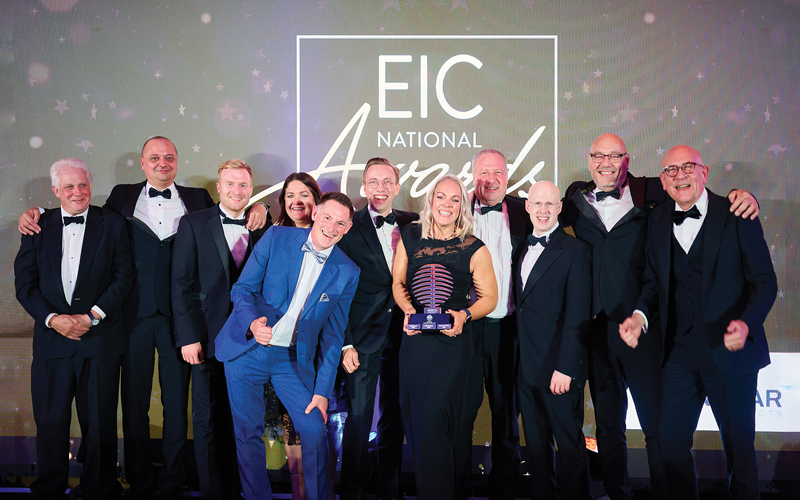
Congratulations on winning the 2025 EIC Company of the Year award. What has been the key to the successful growth of Siemens Energy?
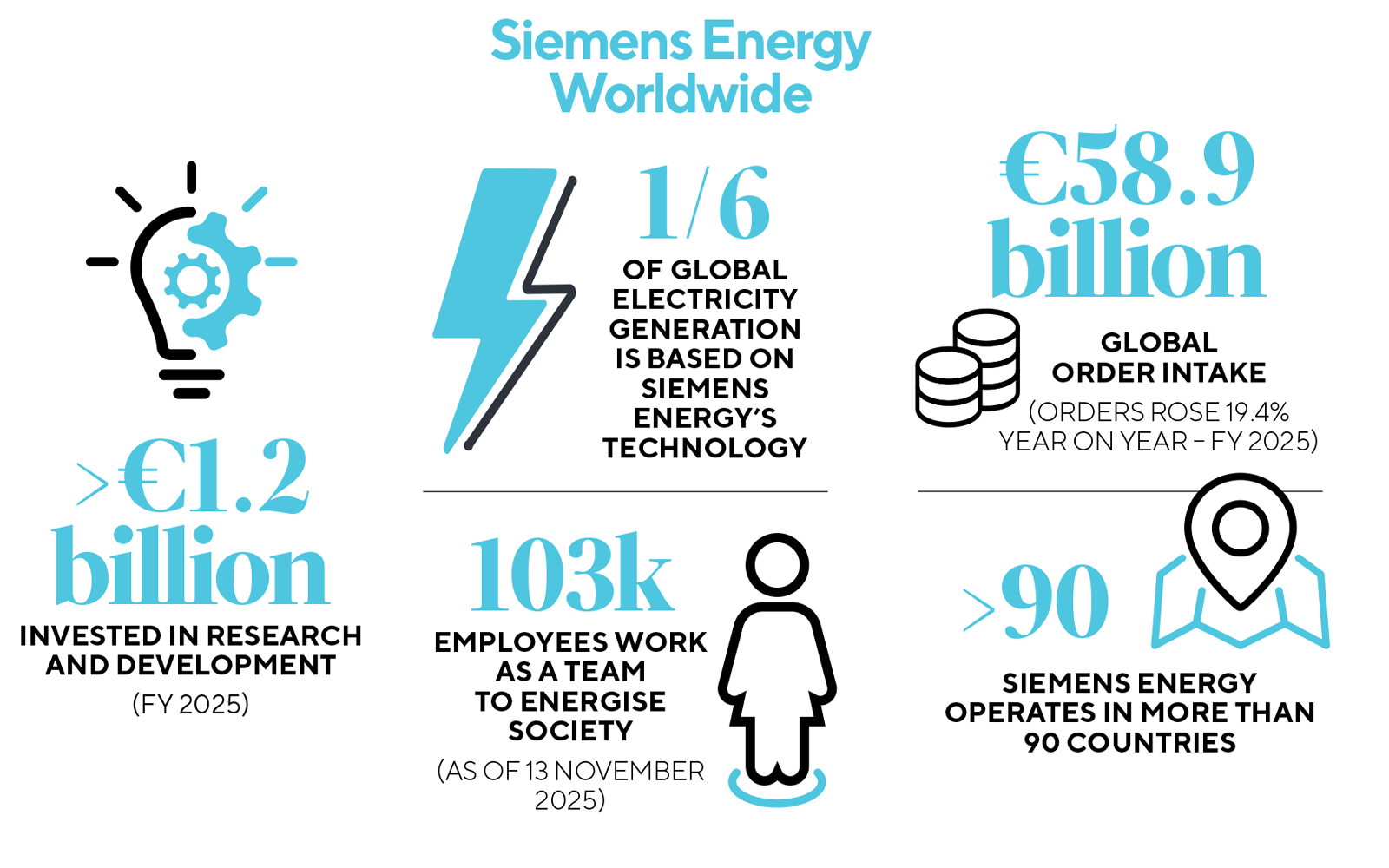
Winning is a huge credit to our teams and the trust that our customers place in us. Siemens Energy has grown into a global leader in energy technology, present in more than 90 countries and powering about one-sixth of global electricity generation. Recognition such as this matters because it reflects real work delivered with customers across service, new-build and digital.
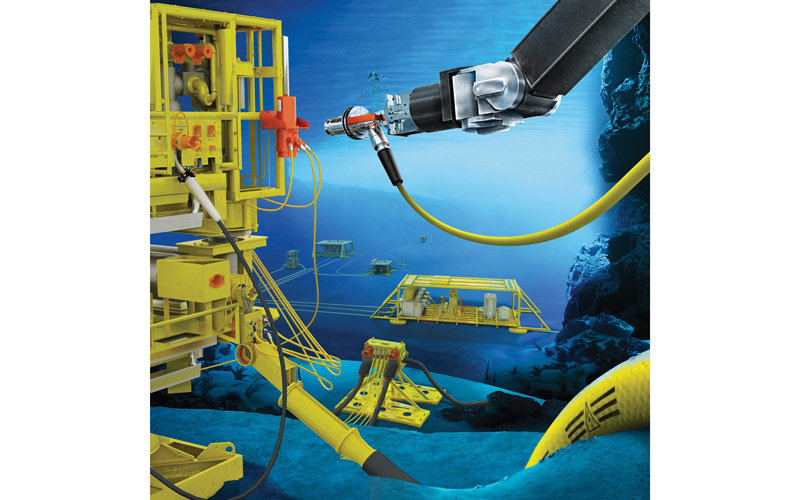
When you look at other awards for which we were nominated, you see why we succeed. Our UK Subsea team was recognised for innovation and new market diversification. Colleagues in Sweden won a sustainability and social impact award. It’s about people driving change in their areas.
What message would you like to share with EIC members about collaboration opportunities and the path toward an integrated, decarbonised industrial future?
I’ve long respected EIC and the work it does to bring industry players together. Joining the Board last year was an honour. No company can do this alone. We continue to draw value from EIC’s global project data, events and insights, and I look forward to learning from peers and sharing our perspective. Collaboration is the strongest lever we have – whether through joint ventures, knowledge-sharing or co-developing solutions tailored to sector needs.
If you look five to 10 years ahead, what do you think will define the ‘next frontier’ in industrial energy transformation?
The next frontier won’t be one big breakthrough – it will be about integration and scale. Electrification, automation and sustainable energy systems will need to work together. Hydrogen-ready infrastructure, AI-driven optimisation and real-time data intelligence will become standard. These technologies will not only cut emissions but also build resilience into industrial systems.
Looking ahead, the real challenge – and opportunity – is how we make all this work across sectors. That’s what will define the next decade.

Follow us
Advertise
Free e-Newsletter