What Asia is teaching the West
From Malaysia to China to Japan, four lessons from Asia that the UK energy industry cannot afford to ignore.
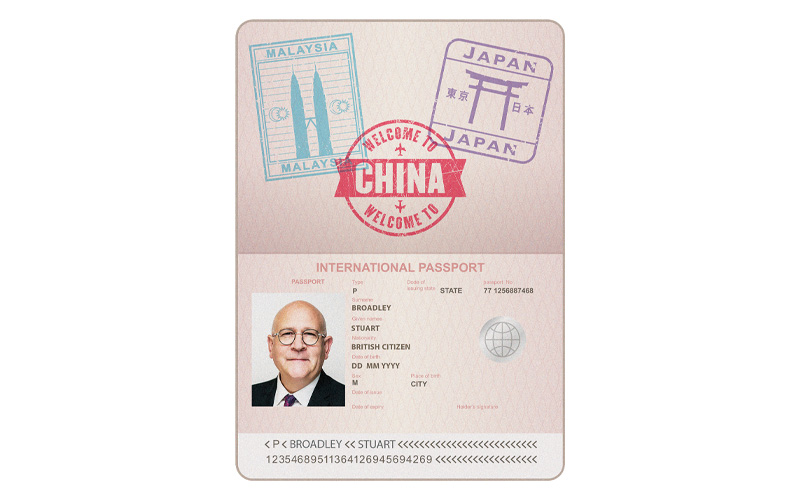
Business travel is an expensive necessity, demanding a clear return on investment. My April tour to Malaysia, China and Japan aimed to engage directly with EIC teams and partners, and to decipher the trajectory of Asian energy and trade to inform the discourse back in the UK.
The trip highlighted four enduring energy transition trends. First, the geography of vulnerability remains paramount; net energy importers are susceptible to price volatility and have fewer levers to meet net-zero targets. Second, the resurgence of nuclear power is undeniable as nations realise that intermittent solutions such as solar PV and battery energy storage systems are insufficient alone. Third, while coastlines are coveted for floating offshore wind, belief in a technology is not synonymous with its bankability. Finally, energy security is increasingly reframed as ‘energy sovereignty’, with nations aggressively narrowing their circle of trust.
The Malaysian launchpad
Malaysia’s approach is a study in calculated ambition. Having legislated in 2023 to reach net zero by 2050 via its National Energy Transition Roadmap, it faces an uphill road, aiming for 40% clean power by 2035. Currently, it relies on coal for nearly 50% of its power, with gas accounting for 40%.
Structural challenges are evident. Malaysia’s GDP remains 20% reliant on oil and gas revenues, keeping it fiscally important. Compounding this, the country lacks wind resources, is hesitant to allocate land for utility-scale solar, and public sentiment remains largely anti-nuclear.
Yet the government has identified three pillars for progress: persuading a sceptical population about nuclear power, developing a hydrogen economy – evidenced by the 60MW green hydrogen plant under construction in Perak – and advancing its role in the ASEAN Power Grid.
Despite palpable enthusiasm for Rolls-Royce small modular reactors, Malaysia remains neutral. Russia’s Rosatom is actively positioning its barge-mounted nuclear solutions as a viable alternative. For companies willing to navigate this, there is a vacuum in the nuclear supply chain awaiting investment.
Energy security is increasingly reframed as ‘energy sovereignty’, with nations aggressively narrowing their circle of trust
China: open for business
In China, the energy transition is anchored by the ‘3060’ goals: peaking CO2 emissions by 2030 and achieving neutrality by 2060. China is the world’s largest electricity consumer, accounting for a third of global power demand while contributing 20% to the world’s GDP.
While China has installed more than 50% of global renewable capacity for five consecutive years, coal remains the bedrock of its power generation. However, it is unmatched in terms of industrial capability – home to eight of the world’s top 10 wind turbine manufacturers.
The UK’s recent rejection of £1.5bn of investment from Ming Yang for a floating offshore wind turbine factory was a missed opportunity, failing to rectify decades of importing 100% of our offshore wind turbines. When I asked Chinese policymakers about this rejection, they were sanguine, dismissing it as a “bump in the road”. Walking in Shanghai, China’s momentum is evident; more than 50% of the cars on the road are electric vehicles. China is investing heavily in energy across all sectors, including nuclear, with 62GW of existing capacity and 38 new units under construction, aiming for 120GW by 2035.
China’s progress is relentless; the West should adapt to the dragon rather than attempting to fight it
Japan: the island fortress
Japan, having legislated net zero by 2050 with an interim 46% emissions reduction goal by 2030, is struggling. Japan shares the UK’s status as an island nation and net energy importer, but its vulnerabilities are more acute. It lacks the luxury of interconnectors – a significant advantage for the UK.
Japan’s energy challenges are daunting, as it imports 90% of its energy. Nuclear generation was halted after the Fukushima nuclear accident in 2011, although 15 reactors have since been restarted, with Japan targeting 20% nuclear power by 2030. Like the UK and Malaysia, land is at a premium, ruling out utility-scale solar. Deep coastal waters necessitate floating offshore wind, but no large projects have reached final investment decision.
Furthermore, Japan’s seismic activity makes local CO2 storage impractical, prompting it to look at carbon exporting. A joint venture between France’s TotalEnergies, Malaysia’s Petronas and Japan’s Mitsui is expected to be sanctioned in 2027 to capture 5mtpa of CO2 from Japan’s energy-intensive industrial sector. A Japanese regulator I met expressed confusion over British “green government” policies, viewing them as contradictory to the priority of energy security – a sentiment likely fuelled by Japan’s status as having the world’s highest strategic reserves, with 200 days of oil reserves compared to the International Energy Agency minimum of 90.
The Asian sun is rising
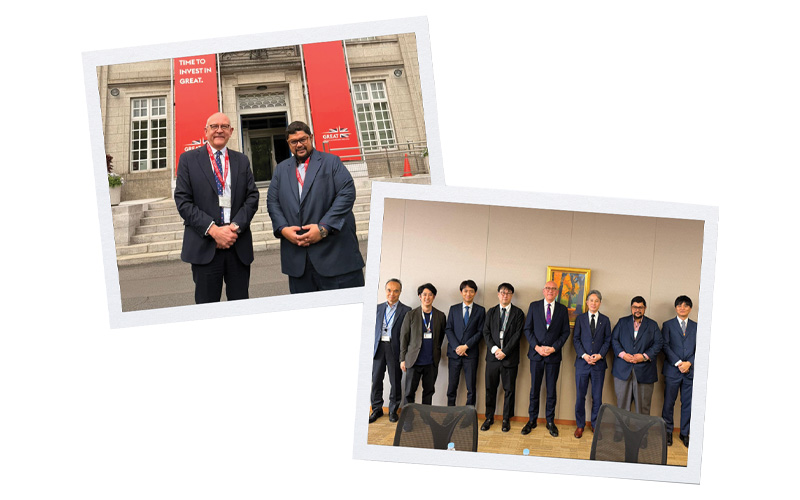
My tour provided a clarifying lens for the global energy transition. China’s progress is relentless; the West should adapt to the dragon rather than attempting to fight it. Japan remains largely closed, yet its net zero aspirations mean that it will eventually require new partners – particularly in floating wind. Malaysia remains an essential launchpad for firms investing in the Asia Pacific region – an affordable, English-speaking gateway that is hungry for global expertise. As the Asian sun rises, my message to EIC members will be to take the heat, rather than stand in the shadows.
By Stuart Broadley, CEO, EIC
Image credit | iStock


Follow us
Advertise
Free e-Newsletter