Building the launchpad for growth
Exploring the link between a consistent policy environment and energy sector growth prospects.

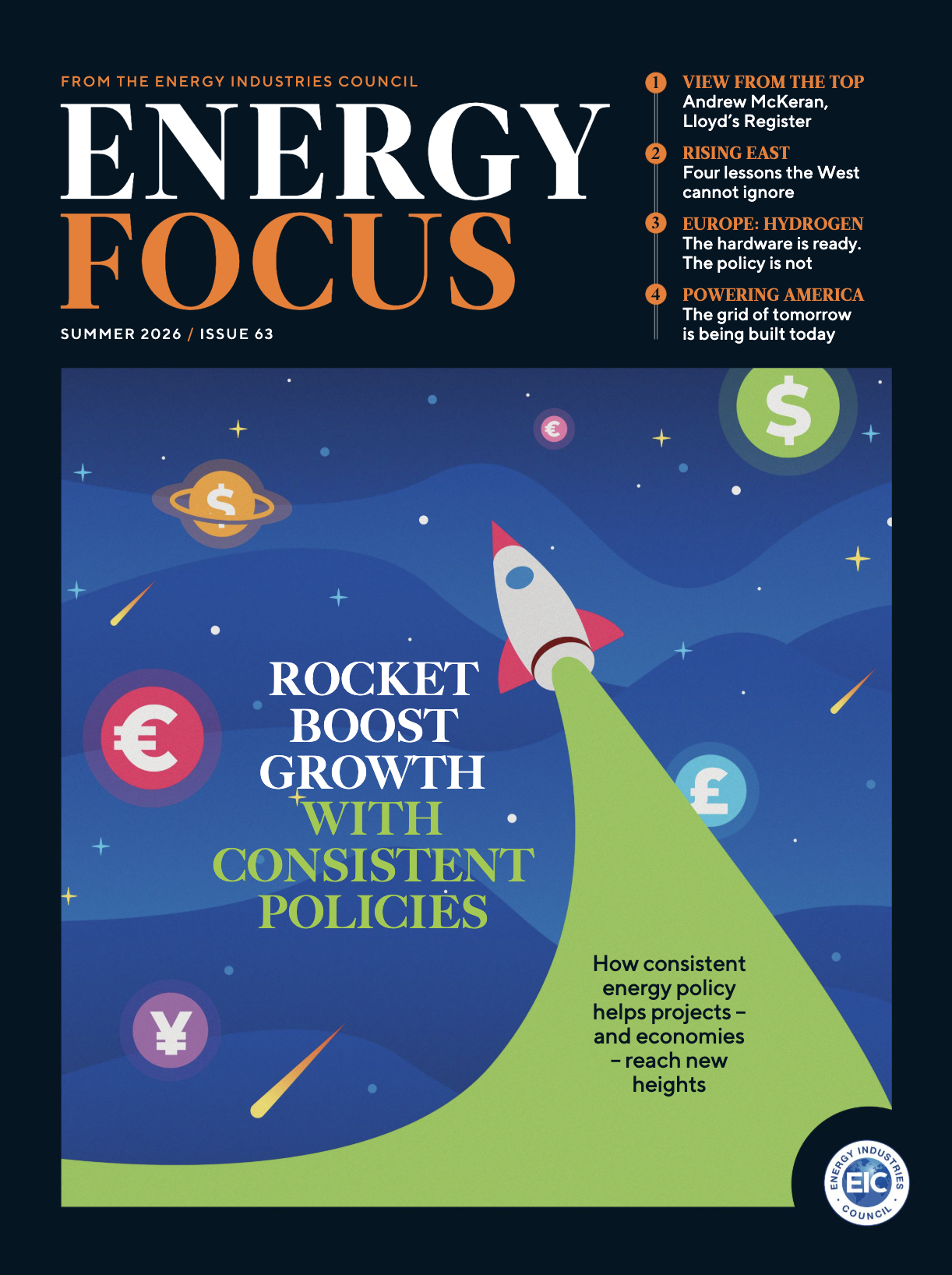
Every rocket needs a launchpad. In the energy sector, that launchpad is policy stability – and without it, even the most ambitious projects risk never reaching the heights they promised.
The relationship between policy stability and economic growth is well known and broadly accepted. When governments set clear, durable frameworks and stick to them, businesses are more likely to invest with confidence, supply chains are more likely to develop and deepen, and economies are more likely to grow. When they don’t, projects stall, capital migrates elsewhere and capability erodes in ways that are slow and expensive to reverse.
Few sectors illustrate this more acutely than energy. Capital-intensive, long-horizon and heavily dependent on regulatory certainty, the sector is uniquely exposed to the consequences of political short-termism.
The International Monetary Fund estimates that resolving policy uncertainty could raise global output by 0.4% in the near term. That may sound modest, but in an industry where the margin between a project reaching financial close and falling away can be wafer-thin, it is anything but.
The real cost of stop-start policymaking
EIC insight consistently shows that the cost of policy instability is far from abstract. In the latest Bankable Energies Report, published in March 2026, 32% of energy executives and CEOs identified political, policy and regulatory uncertainty as the single biggest blocker to project bankability – ahead of funding constraints, permitting delays and grid capacity.
“The industry’s demand for certainty is far from rhetorical,” says Mahmoud Habboush, EIC Communications Adviser. “It is about real frustrations that are already affecting investment, project delivery and the wider prospects for the energy sector.”
The industry’s demand for certainty is far from rhetorical. It is about real frustrations that are already affecting investment, project delivery and the wider prospects for the energy sector Mahmoud Habboush, Communications Adviser, EIC
When projects stall, the consequences extend well beyond the ventures themselves. Supply chains lose visibility, companies cannot commit to hiring, and skilled workforces migrate to sectors or geographies that offer more consistent opportunity.
“If the supply chain starts moving its focus to other sectors – or, worse, to other geographies – getting that capacity back is expensive and slow,” Habboush warns. “Contractors are often booked three to four years ahead. In some cases, firms have resources for only 10 of 30 opportunities in front of them – so they choose where to commit and the rest falls away.”
In places like China and the UAE, if they make a decision to invest in a certain type of energy or technology, they’re doing it for the long term, and that is what provides the stability Tim Killen, Head of Growth, Fracht Group
Dr Martin Hanton, Green Energy & Sustainability Director at TÜV SÜD Northern Europe, has experienced this firsthand. “When we make significant investments to develop new business areas and then government direction, policy and regulation change in a way that renders these investments misplaced, it means that, in future, the business is much more cautious and wary about responding quickly,” he explains. “Delays have a similar impact – we have had several areas where we have made significant efforts to staff up and gear up for incoming regulations, only for those to then be delayed by several years – which, of course, has a hugely negative financial impact.”
What stable economies do differently
Unger Steel is responding to global data centre demand with a strategy that combines proactive planning, intelligent design and effective local compliance management.
The contrast with markets that have sustained long-term strategic policy frameworks is instructive. China, the UAE and the Nordic economies are each frequently cited as benchmarks for policy coherence, and each has generated tangible economic returns from their commitment to consistent direction.
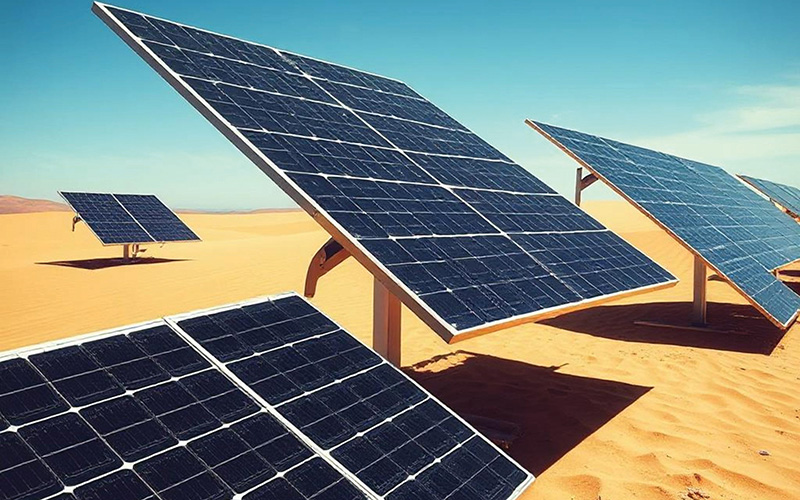
China is the most dramatic example. According to the International Energy Agency, the country invested US$625bn in clean energy in 2024 alone – almost double what it did in 2015 and equivalent to 31% of total global clean energy investment. Crucially, it achieved its 2030 wind and solar capacity targets six years ahead of schedule. That pace is not coincidental – it is the product of industrial policy, infrastructure investment and financing that move in the same direction over many years.
The UAE presents a different, but equally coherent, model. Its Energy Strategy 2050, backed by a commitment to invest up to US$54bn in clean energy by 2030, has given investors a clear and stable commercial backdrop. Installed renewable energy capacity grew by 70% in 2023, and the country is on track to surpass its target of tripling that capacity by 2030.
Norway, meanwhile, generates approximately 98% of its electricity from renewables, principally hydro, and between 2009 and 2019 its GDP grew by 16% while total energy consumption rose by just 3%. This is genuine economic decoupling from demand growth, underpinned by decades of consistent policy.
“What the most successful markets have in common is consistency, coordination and follow-through,” says Habboush. “Investors can see what the direction of travel is, what role the state is playing, what infrastructure is being built and where the commercial opportunities are likely to be. The lesson for others is not to copy any one model exactly – it is to be more coherent.”
Killen draws a sharper distinction between state-directed and shareholder-driven models: “In places like China and the UAE, if they make a decision to invest in a certain type of energy or technology, they’re doing it for the long term, and that is what provides the stability,” he says.
The structural mismatch at the heart of the problem
The challenge is partly structural. Political cycles run to five years; energy project lifecycles run to decades. From concept to final investment decision, a major project can take five to 10 years. Construction adds another two to four. The operational life of the resulting asset may then span 20 to 30 years or more.
Tim Killen, Head of Growth at Fracht Group, a global logistics and project freight forwarding organisation that serves original equipment manufacturers and firms in the engineering, procurement and construction sector across the energy supply chain, sees this tension play out directly. “If there isn’t that certainty and confidence in policy, regulation and return on investment, then that is a huge challenge for industry to decide how and if they want to move forward,” he says. “And if companies and investors want to de-risk, they’re going to go into what they know, which is probably more traditional energy types.”
The absence of cross-party political consensus only adds to the problem – a point made by Martin Layfield, Vice President of Engineering Consultancy at CB&I Asset Solutions. “When governing parties can change every five years, that is far too short to support investment confidence in our industry. Not having cross-party consensus on energy is unhelpful – alignment only appears evident for nuclear currently.”
The ripple effect across industry and the economy
The stakes extend well beyond individual projects or companies. According to EIC data, the UK energy supply chain comprises more than 3,600 businesses, with 82.9% remaining reliant on oil and gas. Yet nearly half of that oil and gas supply chain has already diversified into renewables and other net zero technologies. The two are deeply intertwined, which means that policy instability in one part of the sector is rarely contained there.
This year’s Bankable Energies Report captures the mood clearly. Nearly half (44%) of respondents said that project bankability had not improved in 2025, with only 38% saying it had. “Policy inconsistency does not just dent confidence,” Habboush says. “It raises costs, stretches timelines and weakens growth by making delivery harder and more expensive.”
What business needs from policymakers
The industry’s ask is consistent: a policy framework that holds long enough for companies to hire, invest and deliver against it. Layfield is careful to draw a distinction here. Energy sector businesses do not expect or demand the elimination of uncertainty – they are accustomed to it, and, in some cases, it can even create opportunity. The problem arises when policy shifts are so fundamental that they destabilise the very foundations on which investment decisions are made.
There is a strong link between policy and regulatory certainty, investor confidence and the confidence of businesses to invest – and therefore economic success Dr Martin Hanton, Green Energy & Sustainability Director, TÜV SÜD Northern Europe
“This isn’t unusual, but a drastic change in course or a fundamental policy position that hits the heart of our industry is very problematic,” he says. “There are many in the supply chain and operators who are feeling this firsthand with the position on oil and gas exploration and the tax regime in the North Sea currently. Conversely, we see more momentum and confidence in the north-west of England from the HyNet programme that the government is backing so effectively.”
Hanton adds that businesses broadly respond to uncertainty in one of two ways: by becoming more cautious and waiting until conditions are clear, or by becoming more agile and reacting faster to change. However, he suggests, neither is a substitute for the stable frameworks that allow businesses to plan and grow in the first place. “There is a strong link between policy and regulatory certainty, investor confidence and the confidence of businesses to invest… and therefore economic success.”
By Tom Wadlow, Partner, WD Editorial
Image credit | iStock | Shutterstock

Follow us
Advertise
Free e-Newsletter