News & Events: Don't fall into the hype trap: oil and gas is still the biggest
EIC’s Survive & Thrive 2026 survey finds record revenues but growing caution, as renewables stall and oil and gas fund the supply chain.
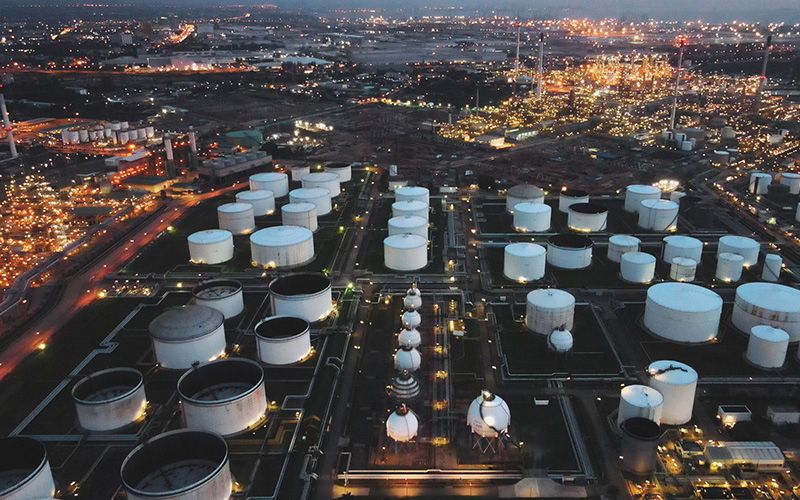
In 2026, EIC’s senior team and I interviewed leaders from 136 EIC member energy supply chain companies across the UK, Europe, Middle East, Asia Pacific and Americas. The results, published in the 10th edition of the EIC Survive & Thrive Insight Report, show that revenues are rising strongly but leaders remain cautious about where they invest – and how much risk they will take on transition projects.
Record revenues, rising caution
Three-quarters of the companies reported record revenues in 2025, with average growth of 23%. Yet executives were far from complacent, mentioning geopolitical uncertainty, policy volatility, rising inflation and unpredictable schedules. Strong revenues are funding business protection rather than speculative growth.
Companies move people and capital towards work that is ready to proceed. In many cases, that still means oil and gas
Strategies reflect this shift: optimisation accounts for 19%, while resilience has more than doubled to 18% in 2026. Companies are concentrating on transformative change, margins, productivity, operational discipline and risk management.
Supply chain companies have seen large project pipelines announced and then delayed. Many have invested time and engineering capacity into opportunities that went nowhere. They now want credible schedules, committed capital and a clear route to contract awards before committing resources.
Oil and gas still dominates revenues
Oil and gas remains the main revenue source, with 94% of interviewed companies being active in the sector; on average, it accounts for 59% of their revenues. Conversely, companies active in renewables fell from 59% to 48%, reflecting the fact that limited renewables work is reaching the supply chain, and at low or negative margins.
EIC’s final investment decision (FID) data, sourced from EICDataStream, shows that the global energy sector with the highest FID rate is upstream oil and gas, at 34%, compared with only 8% for fixed-bed offshore wind. For hydrogen, the rate is 10%, while carbon capture is 8%, and floating offshore wind is below 1%.
Supply chain companies cannot sustain capacity with such low progression rates. When transition projects are repeatedly delayed by financing costs, policy and regulatory uncertainty, infrastructure constraints or changes in scope, companies move people and capital towards work that is ready to proceed. In many cases, that still means oil and gas.
Exports up, but playing safe
Exports and international trade hit a four-year high of 56% in 2026, yet developing entirely new exports has been the least popular growth strategy across all 10 years of Survive & Thrive. Companies prefer expanding in familiar territories to avoid stretching resources thinly, with Europe being the established destination and the Middle East (45%) and Asia (44%) the leading targets for further growth.

AI and data centres: new fronts
Nearly 90% of companies use AI internally, but only 44% offer AI-related services to customers. Companies may be testing AI first, wanting evidence that it can improve productivity before making it central to their customer proposition. This means that, so far, there has been no uptick in the number of success stories being reported by companies owing to AI investments. We wait to see if that will come through more strongly in 2027.
Data centres are a more immediate commercial opportunity, with 45% of companies interviewed entering the data centre infrastructure market. Many already have relevant capabilities in power systems, cooling, structural engineering and large-scale project delivery. Data centres offer a direct route into a fast-growing adjacent market without requiring new expertise.
Closing the ambition gap
The global energy supply chain is in strong financial health, but with a lower tolerance for uncertain work. Engineering capacity will not wait years for transition projects to secure finance or permits. Developers and policymakers must close the gap between ambition and investable projects by accelerating FID rates and providing schedule confidence. Until then, oil and gas will continue to provide the dependable work on which the industry relies.

Get involved and find out more
Contact membership@the-eic.com to learn more about these new developments and how to join EIC.
Upcoming events
ROG.e 2026
21-24 September 2026
Rio de Janeiro, Brazil
the-eic.com/Events/Exhibitions/ROGe2026-UKPavilion
EIC Infrastructure Breakfast at Hydrogen Energy Hamburg
20 October 2026
Hamburg, Germany
the-eic.com/EventDetail/dateid/4847
WESCA Awards London
29 October 2026
London, UK
the-eic.com/WESCA/WESCA-Awards-London
ADIPEC 2026
2-5 November 2026
Abu Dhabi, UAE
the-eic.com/Events/Exhibitions/ADIPEC2026%7CEIC
Check out our full calendar at the-eic.com/Events/Calendar
Latest reports
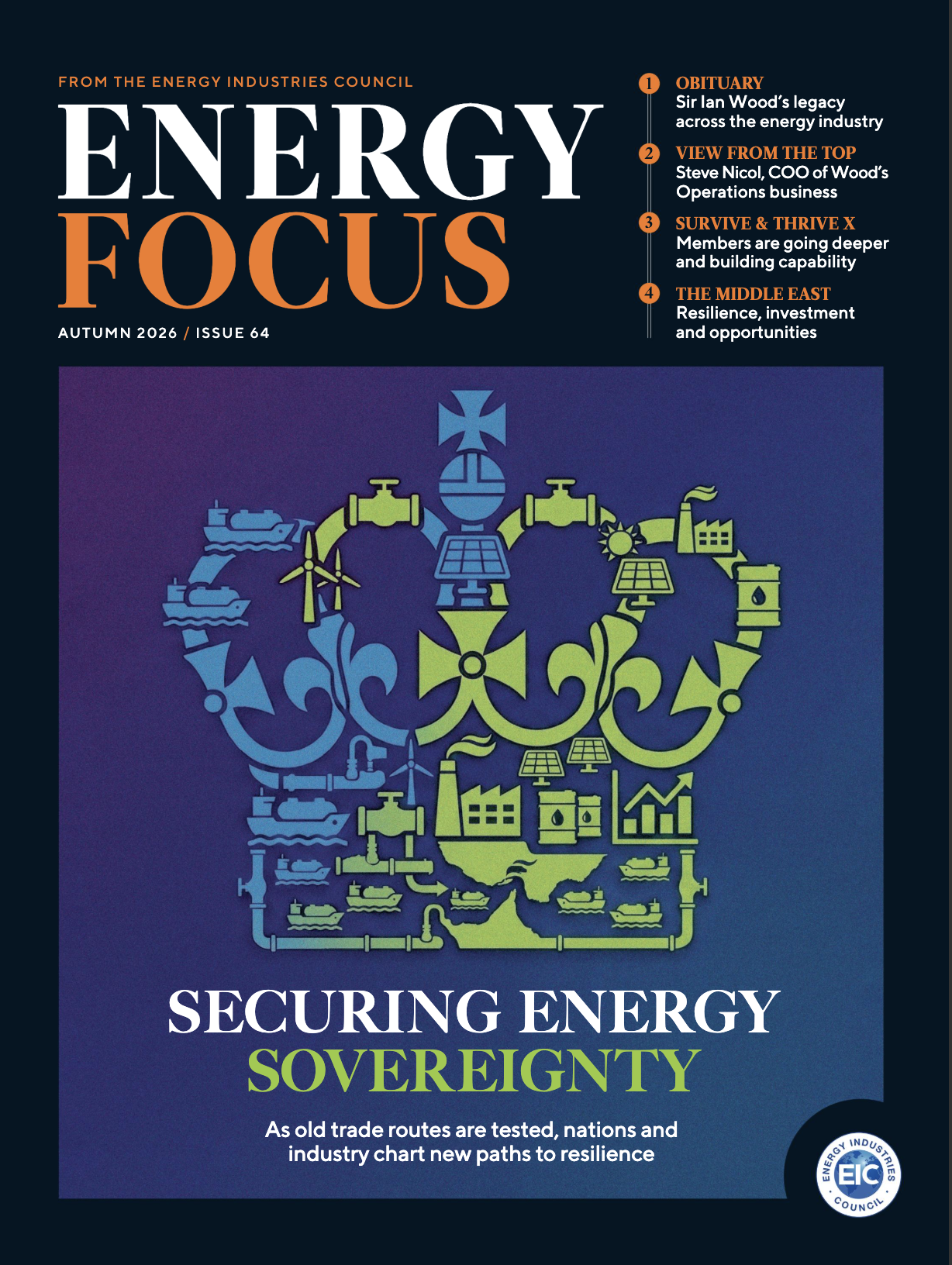
EIC Survive & Thrive X
EIC Insight Report: Hydrogen – Europe
EIC Insight Report: Q2 Cross Sector Decommissioning
Access to these reports and more is free to EIC members on EICDataStream. If you are not a member and want to know more, visit the-eic.com/Membership
By Stuart Broadley, CEO, EIC
Image credit | iStock

Follow us
Advertise
Free e-Newsletter