Bankability and certainty: The global supply chain challenge
From Europe’s accelerating decommissioning pipeline to South America’s race to build a hydrogen supply chain, new EIC insights show how stable policy unlocks investment certainty – while regulatory and political volatility leaves projects delayed, supply chains stretched and capital looking elsewhere.
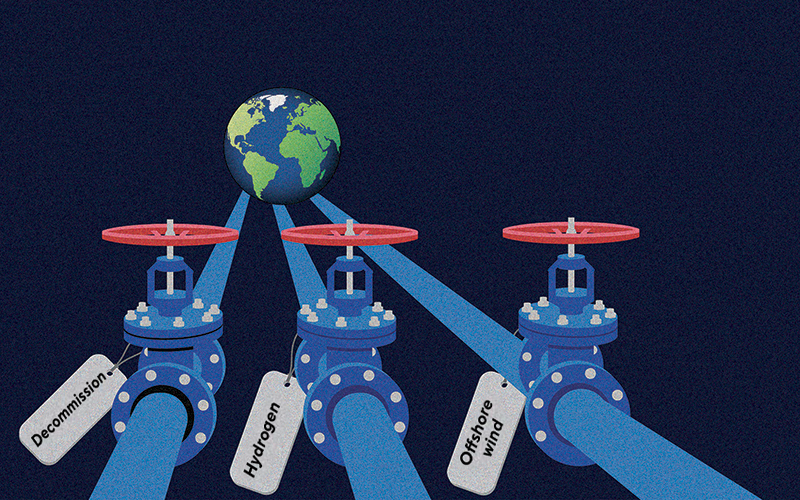
In the energy sector, ‘bankability’ has become a defining benchmark. Developers must demonstrate certainty to allow projects to move forward, but the supply chain requires this same level of confidence to plan effectively and ensure availability. Without a clear and credible pipeline, the highly specialised expertise required to deliver the global energy transition is put at risk – pushing companies to relocate to markets that offer greater stability and clearer long-term prospects.
European decommissioning: A maturing market
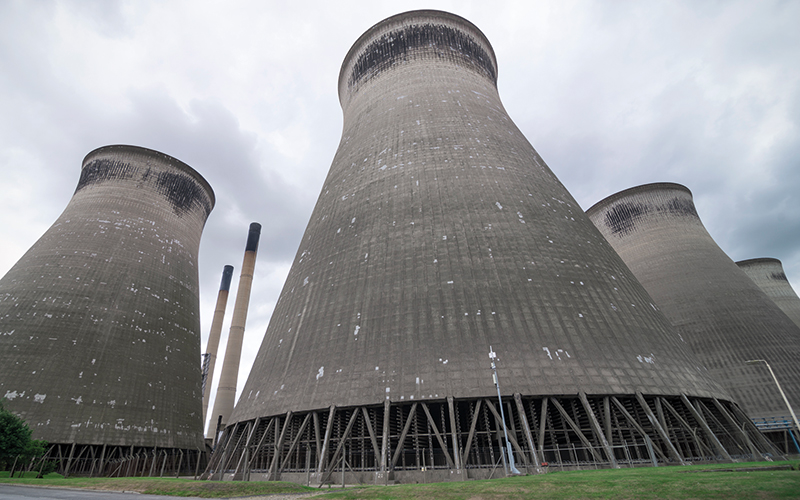
Europe’s integrated energy system has entered the 21st century at a mature age and is now in need of replacement, with the decommissioning of older assets increasing. We see a building pipeline across all sectors – oil and gas, nuclear and offshore wind – and while it is early days for solar, biomass and geothermal, opportunities are expected to emerge there, too.
This surge is driving international demand for specialised supply chain capabilities. These typically include project management, engineering, permitting, lifting and mechanical handling, waste and hazardous waste management, and demolition and deconstruction services.
For oil and gas assets, the bulk of the work resides in the wider North Sea, specifically the UK Continental Shelf (UKCS) and the Norwegian Continental Shelf, followed by the Dutch sector. The UKCS currently dominates forecasted activity, exceeding an annual spend of US$2.5bn and an estimated total value of £27bn before 2032.
For nuclear, with more than 130 nuclear reactors in the whole of Europe, the estimated value of decommissioning activity is US$120bn
Looking ahead, Norway is expected to emerge in the 2030s with a substantial market. Onshore demand is also growing in greater Europe, particularly in Poland, Germany and Romania. While land-based services typically operate on a lower cost base than their offshore equivalents, they represent a firm, predictable revenue source for providers.
The scale is equally huge in the nuclear sector. With more than 130 nuclear reactors across Europe, the estimated value of decommissioning activity is US$120bn – US$89bn of which has already been awarded. The UK, Germany and France lead in this area.
South America: The hydrogen frontier
South America is positioning itself as one of the most promising regions for hydrogen development. Grey hydrogen currently dominates the operational landscape, while green hydrogen has production facilities in five countries, where the sector is busy with pilot plants and experimental projects.
However, supply chain gaps remain. According to EIC Supply Map data, equipment specific to hydrogen, such as separators, purification systems and water treatment units, has fewer manufacturers and less proven capabilities. Furthermore, the region lacks domestic manufacturing capacity for steam methane reformers, relying on imports of core equipment and components such as catalysts from suppliers in the US, Europe and Asia.
To fill these gaps, countries such as Chile and Brazil are emerging as regional hubs for electrolyser production. Chile has secured more than US$1.2bn in funding through the Production Development Corporation, while Brazil is leveraging its strong oil and gas sector for potential domestic supply chain delivery. In contrast, Colombia is expected to remain reliant on imports due to limited manufacturing capacity, while markets such as Argentina, Paraguay, Uruguay and Peru are worth watching as new legislation creates viable opportunities.
US offshore wind: Navigating uncertainty
In contrast to emerging opportunities in the south, the US offshore wind market has faced frustration. Geopolitics, rising inflation rates and global supply chain constraints have combined to create long-term uncertainty.
Geopolitics, rising inflation rates and global supply chain constraints have created long-term uncertainty in US offshore wind
Current import restrictions mean the supply chain is feeling the effects; it is difficult to adhere to new rules where US supply chain strengths are low and depend heavily on imports. This results in slower procurement and compliance complexity. However, EIC data suggests that companies with cross-sector capabilities can spread their risk, leveraging their expertise to remain active in other projects while the wind sector stabilises.
Find out more
Contact membership@the-eic.com to learn more
Unlocking investment
An urgent need for certainty
The contrast is stark: where policies provide long-term certainty, markets gain momentum – as seen in South American hydrogen. Where policy direction is unclear, as in the US, projects stall. This reinforces one of the EIC’s Five Golden Rules: stable policy is essential to unlock investment and progress.
For decommissioning, uncertainty only compounds the challenge; projects slip to the right, threatening the supply chain crunch about which the industry keeps warning. The opportunities exist, but the supply chain is mobile; without certainty, companies will relocate to markets that value their expertise and offer bankable projects.
By Rebecca Groundwater, Global Head of External Affairs, eic london
Image credit | iStock | Getty

Follow us
Advertise
Free e-Newsletter