A project pipeline is not a supply chain
EIC’s 10th Survive & Thrive report finds a sector growing steadily but wary of hollow promises. Two member companies show what it actually takes to turn a pipeline of announced projects into real, deliverable capability.
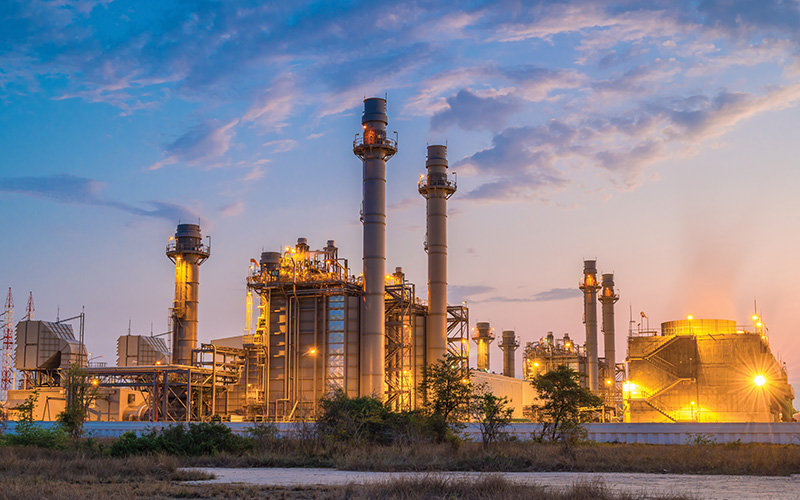
Energy policy is often measured by targets, announced capacity and the size of the development pipeline, but the supply chain experiences things differently. Its main concern is whether projects reach final investment decision, contracts are awarded and companies have enough visibility to invest in people, equipment and facilities.
What the numbers show
EIC’s 10th Survive & Thrive report, based on interviews with 136 energy supply-chain companies, shows a sector that is strong yet careful about where it commits capability. Three quarters of participating companies reported average revenue growth of 23% in 2025, and 91% expected the growth to continue this year.
However, supply chain companies are still very cautious and far from being in a state of complacency. In fact, resilience, optimisation and diversification are all among their favourite strategies. What is really happening is that companies are using the good years to protect themselves against weaker or less predictable project pipelines.
This caution is well explained by final investment decision data. About one quarter of upstream, midstream and downstream projects under development has been given the go-ahead for building. Cleantech is in a different world, with 14% of renewable projects having received the green light for investment, 10% for hydrogen, 8% for carbon capture and offshore wind, and less than 1% for floating offshore wind.
These figures put the state of the supply chain in perspective and clearly tell us that a large, bloated pipeline of announced projects can create a lot of activity on paper – with front-end engineering design (FEED) and pre-FEED contracts – but does not generate the real work that the chain needs, which is to actually build these projects.
A pipeline of conceptual projects does not create supply chain capability. Companies – and entire sectors – build capability on the back of a sustained supply of projects that allows them to keep, train and hire experienced engineers and qualified welders while maintaining factories, test facilities, vessel access, specialist software and, importantly, relationships. These assets take years to put together and can be lost beyond recovery when order books are negligible and projects keep moving to the right.
The real constraint is senior decision bandwidth – the people who own interfaces, close gaps and hold the delivery line under pressure Alessandro Carmo, DAPIN
Capability built on the ground
IEP Process Solutions’ work in Qatar shows how this works in real terms. The company, featured in the report, created Qatar’s first open analyser system integration facility, bringing design, engineering, fabrication, factory acceptance testing and commissioning into the country. Revenue doubled from £1.5m in 2023 to £3m in 2025 as exports reached 40% of turnover. Its conclusion was direct: “Building local engineering, fabrication and FAT [factory acceptance testing] capability can improve project delivery, reduce coordination risks and strengthen long-term client relationships.”
Still funded by oil and gas
This very situation of too few projects reaching construction helps to explain why oil and gas still accounts for an average of 60% of the revenue reported by participant companies, and why 94% of these businesses remain active in the sector – continuing to fund much of the engineering, manufacturing and operational base used elsewhere in the energy industry. We cannot stress this fact enough, but it does not mean that renewables will have to be fed by oil and gas forever. The industry needs more projects that move at a faster pace, which will help to create more sustainable capacity and capabilities to deliver on net-zero targets.
For now, the interviews show that the share of companies active in the renewables sector fell from 59% to 48%, even as its average contribution to revenue rose from 10% to 13%. Companies are also taking on more work outside energy, where the average revenue share reached 31%. That can protect jobs and facilities, but it also shows that energy projects are not producing enough work. This diversification creates work for the supply chain, but it is ultimately a sign of ailment: continued diversification into other sectors could mean energy industry capacity and capability lost beyond return. For many, the energy industry was the reason for their existence. If they continue this shift, that reason will cease to exist, and they will find a new purpose and a wholly new industry.
A pipeline of conceptual projects does not create supply chain capability
Organisational capability
Capability is organisational, too. DAPIN, another EIC member in the report, built its Middle East business around senior engineers, structured mobilisation, clear interface ownership and audit-ready documentation. In 2025 it generated an estimated €6.5m of regional workshare revenue and reported staff retention of 92% to 96%. Commercial director Alessandro Carmo says that the real constraint is rarely the number of junior staff available, but “senior decision bandwidth – the people who own interfaces, close gaps and hold the delivery line under pressure”.
Pulled together, these strings tell us that policymakers should concentrate on the conditions that keep supply chain capability productive. A credible pipeline means investable projects that move beyond initial announcements and FEED. But supply chain capability is only strengthened through the right regulatory and physical infrastructure, including permitting, grid connections, ports and pipelines. The most important message from these interviews is that the supply chain is maintained and strengthened through continuity of work, the right infrastructure and investment confidence that allow projects to move from concept to build.
Image credit | Shutterstock

Follow us
Advertise
Free e-Newsletter