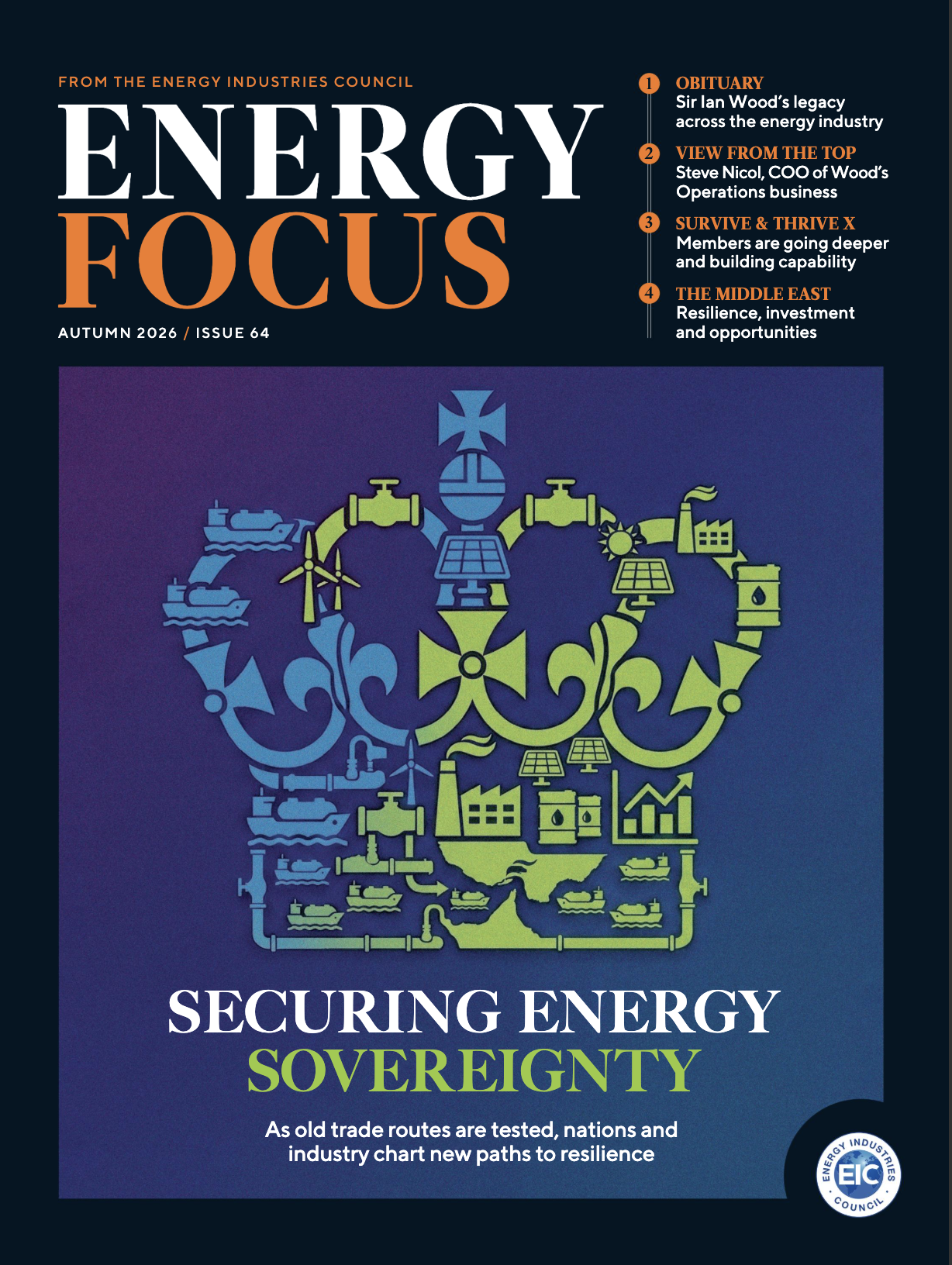
Securing energy sovereignty
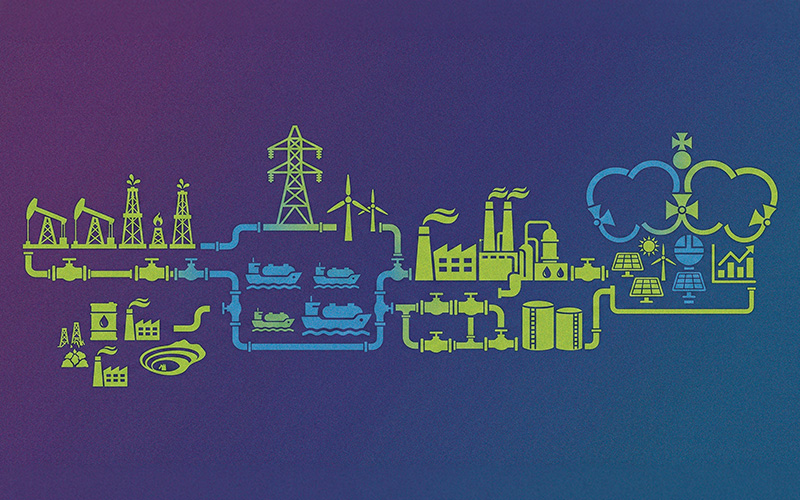
With tensions in Strait of Hormuz rumbling on and vulnerabilities across key energy trade routes laid bare, governments and businesses are accelerating efforts to develop alternative infrastructure, new geopolitical alliances and strategic bypass mechanisms.

If 2026 has taught us anything, it is that physical trade – and the waterways on which relies – remains incredibly important in an increasingly digital age.
Today, roughly 90% of all global freight still travels by sea*, with much of this traffic flowing through a select number of pinch points. These include canals and straits that, in recent years, have become significant sources of economic headaches.
Back in March 2021, the six-day blockage of the Suez Canal was estimated by the World Economic Forum to have cost global trade somewhere between US$6bn and US$10bn. In 2024, the Suez Canal Authority reported that its revenues had lummeted from US$10.2bn to US$4bn as shipping companies diverted vessels away from the Red Sea due to Houthi attacks.
Since then, it has been revealed that the Panama Canal could face potential draught restrictions by 2027. And the US and Israel’s ongoing conflict with Iran has severely disrupted shipping through the Strait of Hormuz, which is typically responsible for the transit of around 20% of the world’s oil and liquefied natural gas. This has contributed to increased inflation across much of the world.
The industry is moving towards more diversified, flexible and resilient operating models, with energy security now viewed as a long-term strategic priority rather than a short-term response to individual events Lynn Coutts, ATPI
Two pipelines are rising to the fore
The closure or threatened closure of these important chokepoints are forcing the energy industry to find new answers to an old question: how do you reliably move oil and gas from where it is produced to where it is needed?
Lynn Coutts, Managing Director of Middle East for ATPI – a firm supporting international energy operators in the region with specialised travel services – is witnessing real changes.
“The current situation has reinforced just how critical established energy transit routes remain to global markets, particularly the Strait of Hormuz,” she explains. “While the strategic importance of these routes has long been recognised, recent events have accelerated efforts to reduce reliance on any single corridor by strengthening resilience and creating greater flexibility.”
Coutts highlights Saudi Arabia’s East-West Pipeline to the Red Sea and the UAE’s pipeline to Fujairah as significant examples of transit routes that are receiving attention as alternative ways to export crude without the Strait of Hormuz. The objective, she argues, is not to replace existing routes, but to create greater optionality and ensure that there are viable alternatives if disruption occurs.
“More broadly, regional pipeline, terminal and port developments are receiving renewed attention as countries look to diversify export options and reduce operational risk,” Coutts adds. “And companies are strengthening shipping strategies through greater use of strategic storage, more flexible vessel deployment, diversified supply arrangements and enhanced contingency planning.”

Within the challenges lie opportunities
Of course, the diversification of long-established supply chains requires careful consideration. It is simply not possible to make wholesale switches overnight, with many significant operational challenges and risks to consider.
“Diversification only creates resilience if organisations have the data, technology and governance to manage those options effectively,” Coutts says, emphasising the importance of visibility.
“The biggest challenges to overcome will be higher costs; identifying, vetting, and establishing new suppliers; greater exposure to force majeure events; regulatory complexities across different countries; infrastructure limitations; larger and more complex supply networks; digital and cyber risks from increased connectivity; workforce capability and skills availability; and balancing resilience with operational efficiency.”
For major liquefied natural gas, petrochemical and power projects, lenders may require more robust contingency planning… and greater evidence that critical equipment and exports are not dependent on a single transport corridor Pamela McDonald, Pinsent Masons
Alongside these varied challenges, however, are opportunities. The UAE is building a separate 1.5MMbbl/d pipeline to Fujairah alongside its existing 1.8MMbbl/d line, almost doubling combined pipeline capacity. Meanwhile, Goldman Sachs analysts estimate that planned pipeline and export infrastructure projects across the Gulf could create enough capacity to divert 7.3m barrels of oil per day away from Hormuz by 2028. This, together with existing bypass capacity, would allow roughly 60% of Gulf oil exports to avoid the strait.
“Shipping and marine logistics providers are benefiting from increased demand for flexible vessel capacity, alternative routing and enhanced maritime risk management,” Coutts adds. “Companies are also investing more heavily in strategic energy storage, digital monitoring, predictive analytics, cybersecurity and supply chain visibility to improve operational resilience and respond more effectively to disruption.”

The legal and contractual landscape is shifting
Undoubtedly, the expectation is that recent events will lead to lasting changes.
This is the view of Pamela McDonald, Partner at multinational law firm Pinsent Masons and head of its Doha Office. Specifically, from a legal perspective, she anticipates that major energy project investors and lenders will place ever-greater emphasis on geopolitical resilience, should sustained disruptions continue.
“Projects highly dependent on Middle East export routes could face high financing costs, enhanced lender due diligence, increased contingency requirements, greater scrutiny of supply chain resilience and demands for additional political risk protections,” McDonald says.
“For major liquefied natural gas, petrochemical and power projects, lenders may require more robust contingency planning, additional reserves, enhanced insurance programmes and greater evidence that critical equipment and exports are not dependent on a single transport corridor.”
As an adviser to Middle Eastern clients in the infrastructure and energy sectors, McDonald also reveals that the US and Israel’s ongoing conflict with Iran has already prompted legal advisers to conduct reviews of force majeure, material adverse change, insurance and risk-allocation provisions.
“In my view, future energy contracts are likely to address issues such as chokepoint disruption, sanctions escalation, war-risk insurance withdrawal, prolonged shipping re-routing and security-related supply shortages,” she says. She highlights the importance of contractual wording, given that recent disputes in the Red Sea and Strait of Hormuz have not centred on whether disruption occurred, but on which party bears the resulting consequences.
“One of the clearest lessons from recent disruptions is that many legally viable claims fail because they are poorly documented,” McDonald adds. “By the time a dispute reaches arbitration, contemporaneous records frequently determine the outcome. The strongest claim is rarely the one with the strongest narrative – it is usually the one with the strongest evidence trail.”
Resilience relies on adaptability and optionality
The consensus is that recent disruptions and geopolitical developments are changing the energy landscape.
While the protection of supply chains has historically relied on predictable and largely secure trade routes, uncertainty has pushed resilience and adaptability to the heart of strategic considerations.
Companies are investing in alternative export routes, expanding storage capacity, strengthening contractual protections and building greater flexibility into their operating models in recognition of the more complex geopolitical environment. There has also been a fundamental shift in how energy companies are working with their suppliers, Coutts says.
“During periods of uncertainty, transactional relationships are no longer enough,” she explains. “Companies are looking for strategic partners that understand their operations, can respond quickly and operate as an extension of their business. Strong local expertise and on-the-ground support in complex regions have become increasingly important.
“The industry is moving towards more diversified, flexible and resilient operating models, with energy security now viewed as a long-term strategic priority rather than a short-term response to individual events.”
Companies are investing in alternative export routes, expanding storage capacity, strengthening contractual protections, and building greater flexibility into their operating models
The objective should not be about mitigating disruption – the last half decade has shown that geopolitical events are both unpredictable and inevitable. Rather, value chain players must focus on ensuring that their operations are flexible enough to continue in the face of adversity.
While new pipelines, ports and energy transit options will play a role, the global energy industry needs to rethink priorities and make it clear that optionality is now just as valuable as supply-chain efficiency. Indeed, the long-term winners will be those firms that can weather unique storms and thrive in the face of volatility.
By Tom Wadlow, Partner, WD Editorial
Image credit | iStock And Gemini Generated | Shutterstock


Follow us
Advertise
Free e-Newsletter