Why thermal engineering will define next-generation low-carbon energy
Hydrogen, carbon capture and renewables dominate the transition narrative, but thermal engineering quietly makes each one commercially and technically viable.
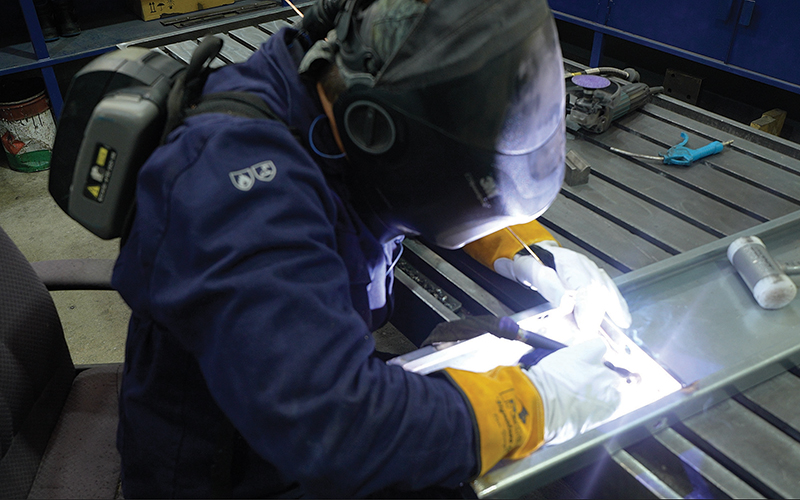
The energy transition is often associated with hydrogen, carbon capture, renewable power and sustainable fuels. Yet behind each of these technologies lies a less visible, but equally critical enabler: thermal engineering. Efficient heat exchange and heat recovery are essential to making many low-carbon technologies technically viable and commercially scalable.
For more than 120 years, Sterling Thermal Technology has designed and manufactured bespoke heat exchangers for some of the world’s most demanding industrial environments. Today, its expertise is helping to solve the engineering challenges that will define the next generation of clean energy infrastructure. As governments and industry work towards ambitious decarbonisation targets, engineering companies that can deliver tailored thermal solutions will play an important role.
The energy transition goes beyond fuel source replacement: it is about using energy more efficiently, recovering valuable resources that would otherwise be wasted and ensuring that new technologies can operate safely, reliably and economically.
Whether they’re supporting hydrogen production, carbon capture, waste-to-energy facilities, renewable energy projects or industrial decarbonisation, heat exchangers optimise thermal energy transfer and recovery. They improve process efficiency, reduce fuel consumption and cut emissions while helping customers to maximise their return on investment. In many applications, effective thermal management is the difference between a technology that works in theory and one that can be deployed at commercial scale.
Cracking the hydrogen challenge
One project that demonstrates this point is Sterling’s contribution to the world’s first floating ammonia-to-hydrogen cracker, delivered in partnership with a leading global engineering company. This is a significant milestone in the development of the international hydrogen economy and shows how specialist engineering expertise can unlock new opportunities.
Hydrogen has the potential to decarbonise sectors where electrification alone is not practical, such as heavy industry, shipping and large-scale power generation. Ammonia has emerged as one of the most promising hydrogen carriers because it can be transported using established global infrastructure before being converted back into hydrogen close to the point of use.
However, the ammonia cracking process presents exceptional engineering challenges. Sterling was initially engaged to design heat exchangers that could operate at temperatures approaching 900°C under high-pressure conditions. Working from only basic process parameters, the engineering team became far more than a component supplier – it became a collaborative design partner.
The original concept using plate heat exchangers proved unsuitable for the operating conditions. The design was reworked, replacing the plate heat exchangers with shell-and-tube heat exchanger technology using Alloy 617, which can withstand the extreme temperatures required for thermocatalytic ammonia cracking.
The solution comprised multiple bespoke heat exchangers, ammonia cracking reactors and waste heat recovery equipment. The successful delivery of the world’s first floating ammonia-to-hydrogen cracker shows the value of collaborative innovation in accelerating the commercial deployment of hydrogen technologies.
The energy transition will not be delivered solely through breakthrough concepts or scientific discovery: success depends on engineering partners that can transform ambitious ideas into manufacturable and operable solutions.
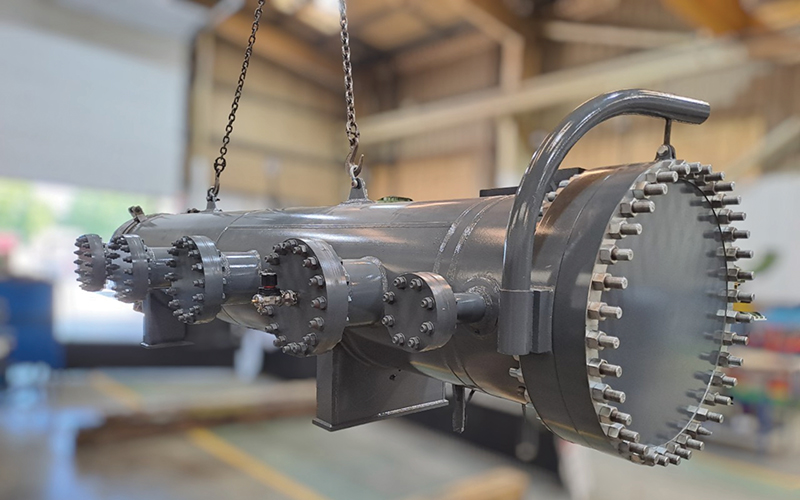
Recovering value from waste heat
Waste-to-energy illustrates this principle in practice. Efficient heat recovery systems maximise the energy extracted from processes, improving both environmental performance and commercial viability.
In many applications, effective thermal management is the difference between a technology that works in theory and one that can be deployed at commercial scale
Across several sectors, businesses are recognising that recovering waste heat is one of the fastest and most cost-effective ways to reduce emissions. Rather than releasing valuable thermal energy into the atmosphere, advanced heat exchange systems reuse it, lowering fuel consumption while improving operational efficiency.
Proven expertise, applied across sectors
This ability to transfer expertise between sectors is one of Sterling’s strengths. With an established heritage in the oil and gas, power generation and nuclear industries, it has deliberately diversified into hydrogen, carbon capture, renewable and energy storage. Today, around 75% of revenue comes from exports, reflecting growing international demand for specialist UK expertise.
That diversity allows the company to apply proven technologies to emerging industries, helping customers to reduce technical risk while accelerating innovation. Every project expands Sterling’s knowledge and strengthens its ability to support increasingly complex energy transition programmes globally.
Building integrated energy systems

As the transition gathers pace, the greatest opportunities will lie in integrated energy systems, where hydrogen, carbon capture, renewable generation, energy storage and industrial heat recovery work together to create more resilient and efficient energy networks. Thermal management will be fundamental to every one of these technologies.
Engineering succeeds by turning difficult problems into practical solutions. That principle continues to guide everything Sterling does. Whether it’s delivering bespoke heat exchangers for pioneering hydrogen infrastructure, improving energy recovery in industrial processes or supporting customers across multiple low-carbon sectors, the objective remains the same: to develop practical engineering solutions that enable cleaner, more efficient and more sustainable energy systems.
Progress will be defined not only by the technologies, but by the ability to engineer them at scale. That is where Sterling is proud to make its contribution.
By Dr Olu Baptist, group CEO, Sterling Thermal Technology
Image credit | Sterling Thermal Technology




Follow us
Advertise
Free e-Newsletter