Connecting Scotland's offshore wind boom
SSEN Transmission’s £29bn grid programme is racing to keep pace with Scottish offshore wind volumes – as record clean energy auctions and further contract rounds make transmission capacity, not turbine numbers, the test of net-zero delivery.
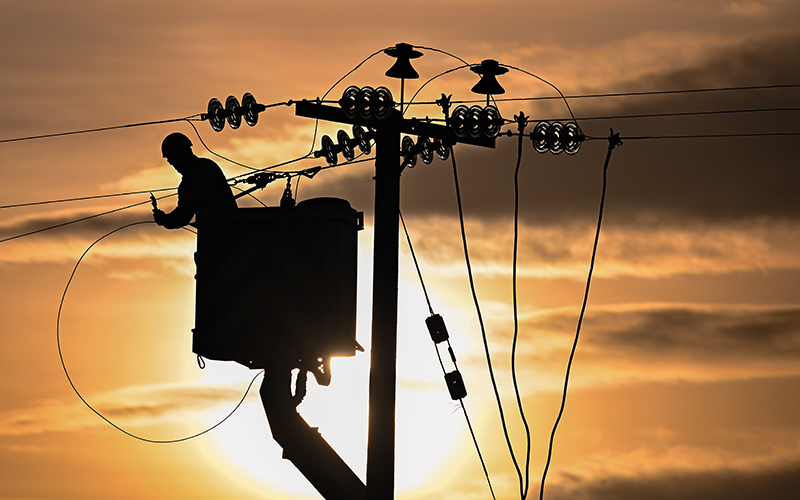
Offshore wind is one of the most significant renewable energy sources, with the UK targeting up to 50GW by 2030 to help it reach net zero. But generation capacity alone is meaningless if the power cannot get from where it is produced to where it is consumed; the critical enabler is not the turbines, but the grid infrastructure.
A £29bn investment programme
Scotland is expected to account for around 20% of UK clean power generation by 2030, and around one-sixth of the economy-wide emissions reductions that the country must make by 2050 will need to come from renewables connected to its transmission network. The company responsible for that network, SSEN Transmission, is undergoing a £29bn-plus investment programme centred on 11 major projects, making it one of the largest infrastructure programmes in Scottish history and arguably the most consequential part of the UK energy transition.
Why grid timing matters
Under the Contract for Difference (CfD) scheme, the journey from award to full commissioning typically spans many years; in Allocation Round 7 (AR7), for example, the required delivery window is up to five years after the award date. Those projects only make commercial sense if the transmission infrastructure for carrying their output is ready when they are. Without timely grid reinforcement, the offshore wind capacity secured through CfD auctions becomes stranded, constraint costs spiral, and the economics of future rounds deteriorate.
The Eastern Green Links
The centrepieces of SSEN Transmission’s Scotland–England Reinforcement Programme are a series of high-voltage direct current subsea links known as the Eastern Green Links. Eastern Green Link 2 (EGL2) is a 505km electricity superhighway that will connect Peterhead in Aberdeenshire to the Drax power station site in North Yorkshire. It will be capable of carrying 2GW of clean electricity and is currently under construction, with a target completion date of 2029.
Eastern Green Link 3 (EGL3), a joint venture between National Grid Electricity Transmission and SSEN Transmission, will deliver 2GW via a 680km subsea and underground cable route between Aberdeenshire and West Norfolk – the largest electricity transmission project of its kind in UK history. A marine licence application was submitted in February 2026, with construction planned from 2029 and operations targeted for 2033.
Eastern Green Link 5 (EGL5), estimated at £3bn, will run mainly offshore for 550km from Peterhead to Anderby Creek on the Lincolnshire coast. Developed on a similar scale to EGL3, it is currently in early consenting. Altogether, this programme of Scotland–England interconnectors represents a significant step forward in north-to-south transfer capacity and the relief of major grid bottlenecks.
AR7’s record auction and the road to AR8
The timing of Allocation Round 7 (AR7) and Allocation Round 8 (AR8) matters enormously for the CfD pipeline. AR7’s offshore wind auction was both the most competitive and the most successful in UK history, securing a record 8.4GW of offshore wind capacity, announced in January 2026. Among the winners was Berwick Bank, SSE’s major fixed-bottom project in the outer Firth of Forth, which secured 1.38GW. It cleared at £89.49 per megawatt-hour – a strong signal that Scottish offshore projects can compete on price. AR8, for which the government has confirmed an opening window of July 2026, is set to follow in 2027 and will be critical for the next cohort of projects, including ScotWind developments that did not reach sufficient maturity for AR7.
Generation capacity alone is meaningless if the power cannot get to where it is consumed
Four years on from the 2022 ScotWind leasing round, none of the 19 awarded projects secured a CfD in AR7. This reflects not a lack of ambition but the long development timelines inherent to offshore wind at scale, and the transmission charging headwinds that continue to weigh on Scottish project economics.
Securing grid connection agreements and demonstrating a route to market will be the defining challenges for the ScotWind cohort as it prepares for AR8 and beyond. Throughout, the grid must be ready to receive these projects.
A supply chain under pressure
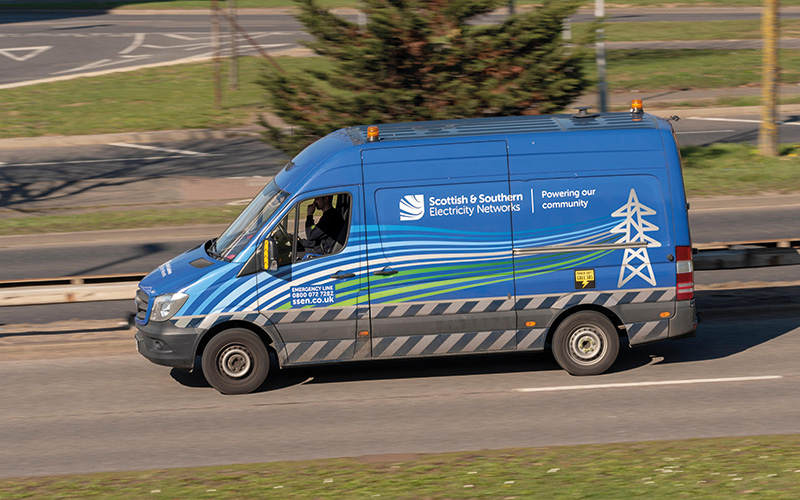
Delivering infrastructure at this pace and scale requires more than regulatory approval and committed capital: it needs a supply chain that can actually execute. High-voltage direct-current (HVDC) cable manufacturing capacity is globally constrained, while competition for installation vessels, converter station components and specialist engineering resources is intense. SSEN Transmission has moved proactively to secure its position. In January 2026, it awarded £1.75bn in contracts to NKT to supply and install cables for the Spittal-Peterhead link and the Western Isles HVDC cable – one of the most significant procurement exercises in SSE’s history. More recently, in July 2026, SSEN Transmission signed a long-term framework agreement with Sumitomo Electric and Van Oord for the engineering, supply, transport and installation of HVDC subsea cable systems, anchored by the proposed Shetland 2 link.
Coordination is the decisive variable
Coordination between transmission owners, system operators, developers and the regulator is critical, and can be the decisive variable. The National Energy System Operator’s connections reform, among other factors, reflects a growing understanding that strategic grid planning and offshore wind leasing must advance in unison. AR7’s success showed that the offshore wind sector can deliver at pace when the conditions are right. AR8 will test whether that momentum can be sustained as projects become larger, further from shore and more dependent on transmission infrastructure that does not yet exist.
Whether Scotland’s renewable potential is fully unlocked will depend on whether the grid keeps pace with the wind sector.

By Nabil Ahmed, Energy Analyst, EIC UK & Europe
Image credit | Alamy | Getty



Follow us
Advertise
Free e-Newsletter