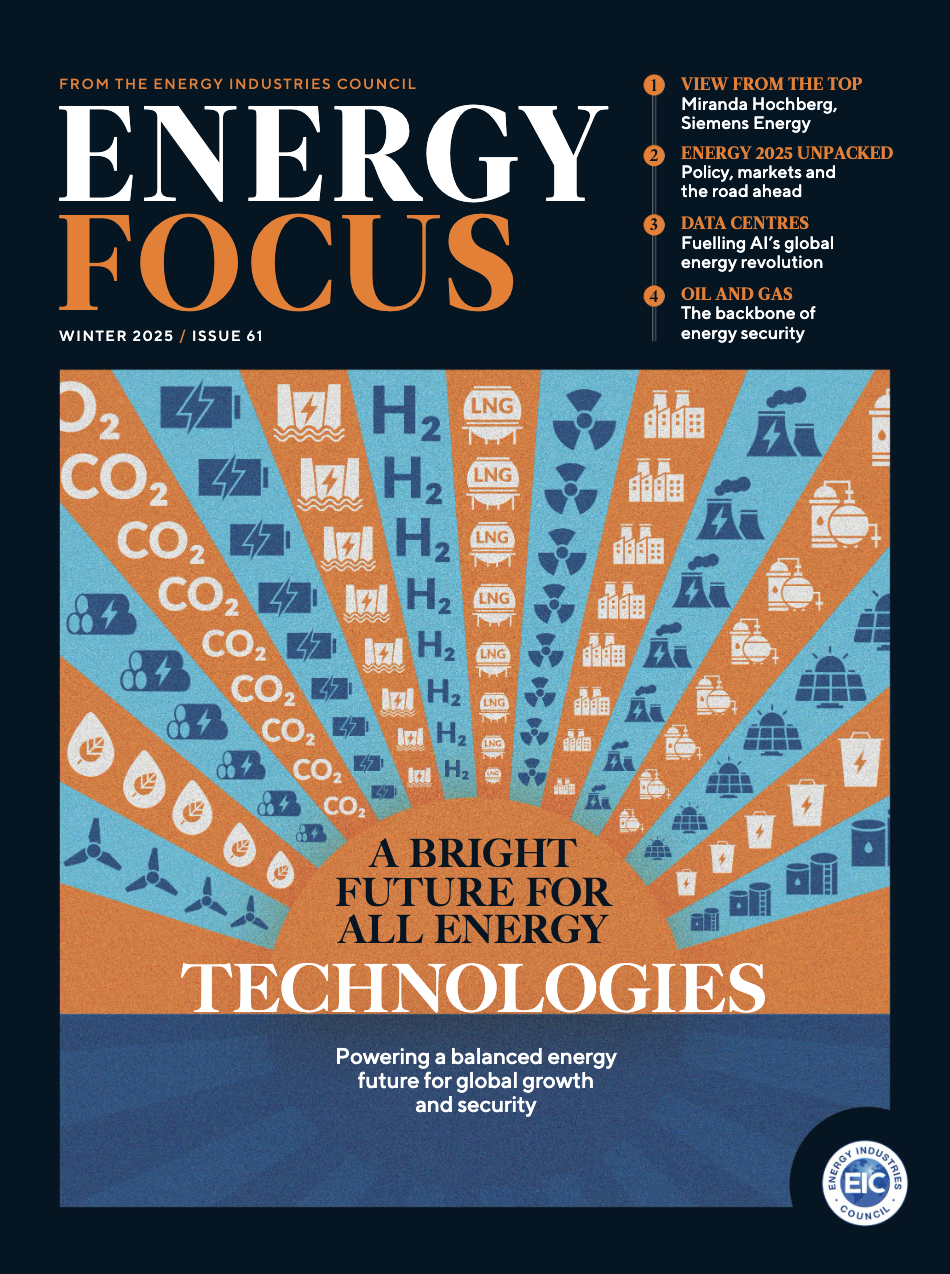
A bright future for all energy technologies: building a balanced and inclusive energy future
Net zero may dominate the energy debate, but it is not the only priority. Governments, policymakers and industry players are grappling with how to balance energy access, demand, affordability and reliability. The real test for a good transition is finding a pragmatic, inclusive path forward – not simply racing to abandon traditional energy sources By Tom Wadlow, Partner, WD Editorial
The energy sector’s direction of travel is clear: to reach net zero by 2050, there must be a shift away from fossil fuels and towards renewable energy sources.
According to the International Energy Agency, energy accounts for more than three-quarters of total global greenhouse gas emissions. Progress in this industry is imperative to meet climate goals – and steps are being taken in the right direction.
In the first half of 2025, renewable energy overtook coal as the world’s leading electricity source. This came after renewables and nuclear provided more than 40% of the world’s electricity generation in 2024. However, while such statistics are promising in the net zero context, it is crucial that the shift from fossil fuels to renewables is balanced with competing priorities.
“Population growth, increasing energy access, technology adoption and data centre requirements are all continually driving up the demand for power,” explains Stuart Broadley, CEO of EIC. “In a perfect world, decarbonisation would be the main priority for all governments. But the reality is that they also need to consider power demands, energy affordability and energy security. Right now, much of the focus is about which fuels and power sources are available fast enough – in the right place and in a non-intermittent and consistent way – to meet demand.”
Broadley makes the point that we cannot blindly try to shoehorn renewable energy into every location, every industry and every power source. Indeed, in many cases, the difficulties of leveraging renewables are prohibitive and it does not make sense to do so.
There’s a simple need to respect, nurture and invest in all energy sources and technologies Stuart Broadley, EIC
Transmission costs are a case in point. “You have to get that power from where it’s generated to where it’s needed, into population centres – and those infrastructural requirements can come at a significant cost,” Broadley adds. “All of these are the reasons why oil and gas still firmly has a place at the table, and why there’s a simple need to respect, nurture and invest in all energy sources and technologies.”
A reliable energy future depends on balanced priorities
Clearly, there is a need to balance power demand and energy affordability, access and availability with net zero. For that reason, oil and gas will remain essential for the foreseeable future, alongside renewables and emerging innovations.
“Fossil fuels represent a reliable technological certainty,” says Massimiliano Tacconelli, VP Nuclear & Big Science Director at Walter Tosto SpA. “They are able to guarantee continuous and flexible service, independent of environmental factors, and they are still the only deployable technology capable of matching demand growth at the same pace – as seen, for instance, with the rapid rise of data centres.”
Geopolitical tensions are further ingraining the need for a reliable, balanced energy mix, with many governments focusing on both protecting existing energy and bolstering domestic supplies to ensure energy security.
Today, it is estimated that around 80% of the global population lives in a country that is a net fossil fuel importer. In other words, around six billion people depend on other countries for their energy, making them susceptible to geopolitical shocks and crises.
“A balanced energy mix, tailored to the specific conditions of each country, is essential to ensure energy security and stable costs over time,” Tacconelli says. “In recent years, we have learned how risky and costly it is to depend too heavily on a single source of energy – particularly when that source lies outside the sovereignty and control of the state.”
Broadley agrees, stating that overreliance on others for energy “makes for a very vulnerable situation”. He explains: “While there’s an argument to say that interconnectors are great because they provide you with an easy means of balancing, they are also easy to disconnect in a time of war. In the current climate, that is a concern for many countries.”
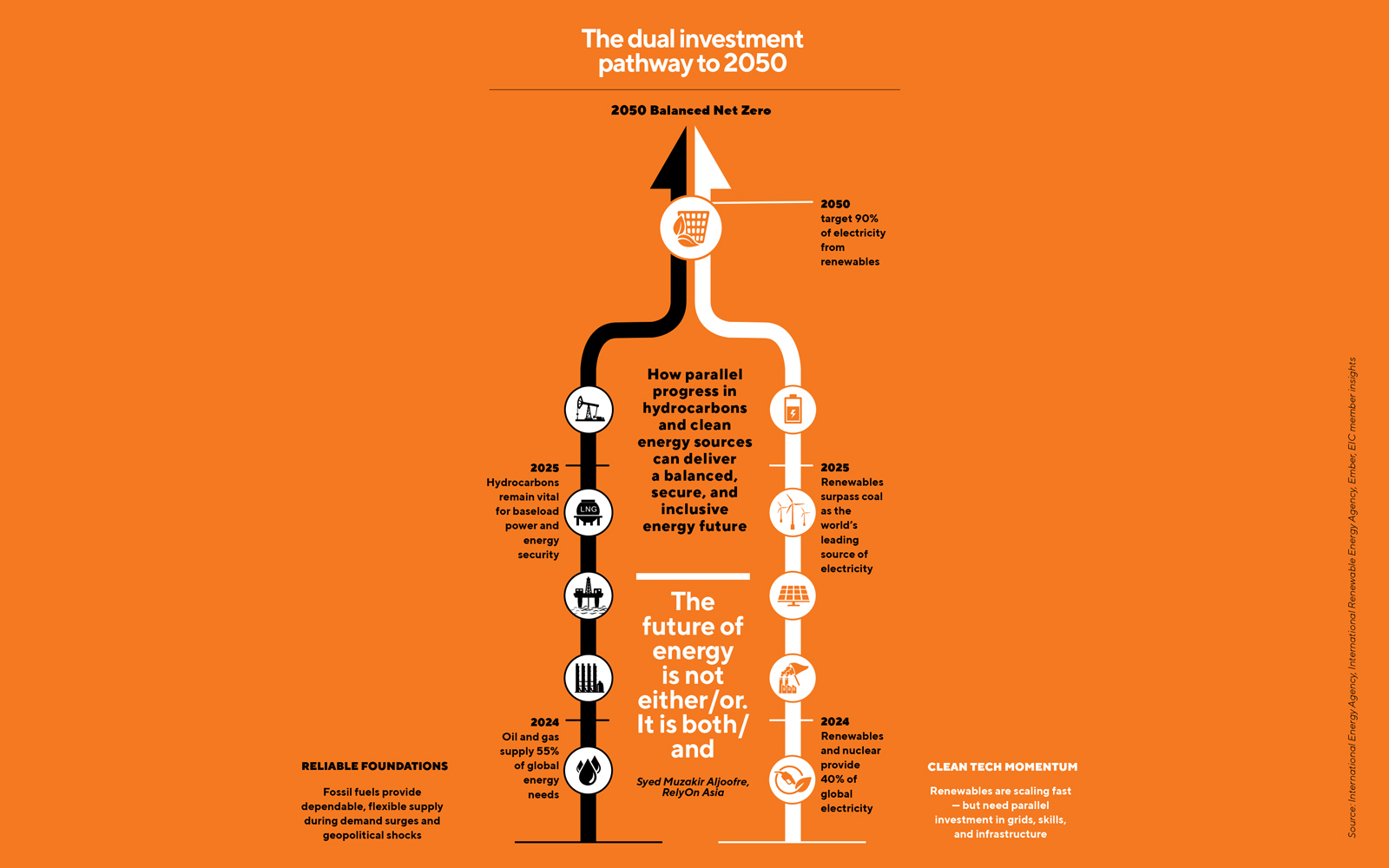
In this context, clean energy becomes appealing. Renewables are available to many countries in one form or another – whether that’s wind, solar or hydropower. The International Renewable Energy Agency believes that 90% of the world’s electricity can and should come from renewable energy by 2050. However, a lot needs to happen before this target becomes viable.
“The greatest challenge lies in the evident mismatch between the speed of demand growth and our ability to build new low-carbon generation facilities,” says Tacconelli. “On top of this, the entire supply chain capable of delivering such plants is far narrower than it was between the 1970s and 1990s, when many of the strategic assets we still benefit from today were built.
A balanced energy mix, tailored to the specific conditions of each country, is essential to ensure energy security and stable costs over time Massimiliano Tacconelli, Walter Tosto SpA
“Bridging this gap will require joint programmes in training and recruitment, substantial investment, and new platforms for collaboration.”
Syed Muzakir Aljoofre, Managing Director of RelyOn Asia, agrees, adding that sequencing is the main challenge in meeting growing global energy demand while driving towards a lower carbon future.
“We must meet rising consumption without destabilising economies or underinvesting in proven sources,” he says. “Premature divestment from oil and gas creates supply shocks, which ultimately hurts consumers and slows the transition. The solution is dual investment – maintaining reliable hydrocarbon output while funding renewables, efficiency improvements, and carbon-management technologies.”
Policymakers and industry players must collaborate and align
In recent times, national oil companies (NOCs) in the Middle East have been setting the dual-investment standard, advancing their research in and development of renewables while sustaining traditional operations.
Oman’s NOC, for example, has created separate entities to manage its energy transition while maintaining oil and gas development. Similarly, Saudi Aramco is actively investing in advanced technologies such as direct air capture and taking innovations from pilot to commercial scale, despite widespread criticism over its cost and perceived effectiveness. By backing these innovations and supporting their development, NOCs are demonstrating their commitment to creating a viable and diversified energy future.
That said, the responsibility should not lie solely on industry players’ shoulders. In all regions, the path forward demands collaboration, a clear direction and policy frameworks that reflect complex global energy needs, with scope for investment across oil, gas and renewables.
“Industry cannot transition in isolation,” says Aljoofre. “Regulators and policymakers must provide predictable frameworks that reward both emission reduction and energy security.
“Collaboration works best where governments and private firms align. We’ve seen this with Malaysia’s progress on carbon capture, utilisation and storage cluster development, and the Middle East NOCs investing simultaneously in solar, wind and advanced oil recovery. These are models that show how diversification can be accelerated without destabilising supply.”
Broadley highlights examples of effective policy in action, pointing to marine, aerospace and electric vehicles as industries that have clear timelines and targets. “Regulators have set clear expectations, and while some deadlines may be shifting because consumers aren’t yet ready to move at the same pace, the presence of those targets is driving progress,” he notes. “In contrast, industries like carbon capture, hydrogen and nuclear lack that same urgency. There are no penalties for falling short, and without consequences, there’s little incentive to act.”
To build towards net zero while sustaining an energy future that is resilient, diversified and inclusive, policymakers must work with industry to define expectations and set the pace of change while protecting critical capabilities and essential resources.
Premature divestment from oil and gas creates supply shocks, which ultimately hurts consumers and slows the transition. The solution is dual investment Syed Muzakir Aljoofre, RelyOn Asia
For Tacconelli, the most significant contribution to a resilient and inclusive energy future will come not from a single breakthrough in technology, but from intelligent management of the overall energy mix.
Aljoofre has a similar outlook: “The future of energy is not either/or. It is both/and. We must invest in hydrocarbons responsibly while scaling renewables and low-carbon innovation.”
This is the blueprint for a balanced energy future. A good transition requires a pragmatic, inclusive approach rather than an accelerated exit from traditional energy sources – one that works for all regions, all sectors and all people.
Image credit | iStock | Shutterstock | Redactive


Follow us
Advertise
Free e-Newsletter