Building the grid America needs now
As artificial intelligence and electrification rewrite the US’s energy future, Siemens Energy is seizing the moment – investing US$1bn, creating 1,500 jobs and helping to build the grid of tomorrow.
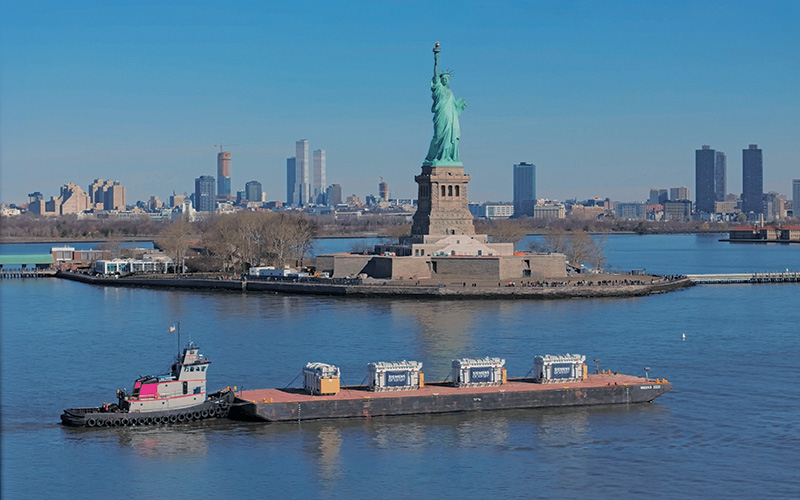
Just a few years ago, there was a sense that transformational shifts were underway in the US power sector. Electrification of the transportation, industrial and commercial sectors was driving a surge in power consumption that required both expanded generation capacity and robust grid infrastructure. Data centres were already prevalent at this time, as digital storage, web hosting and cloud computing had become mainstays of the technological landscape. But the projections of our future power needs changed drastically as the giants of Silicon Valley and power suppliers coast-to-coast started to grapple with the buildout of artificial intelligence (AI). These trends have converged to make the US the hottest electricity market on the planet – and a once-in-a-generation opportunity for Siemens Energy.
Growth mindset
On February 3, 2026, Siemens Energy CEO Christian Bruch and I were in New York to announce a US$1bn expansion in the US, with projects in Mississippi, North Carolina, Florida, Alabama, New York and Texas. The investment spans the full breadth of power infrastructure: production of critical components for generation, transmission and distribution; a new factory for high-voltage switchgear; ramped-up large power transformer production; resumed gas turbine manufacturing; and a strengthened supply chain for all of the above.
We are ramping up large power transformer production, resuming gas turbine manufacturing and strengthening the supply chain that makes the components for all of these pieces of equipment
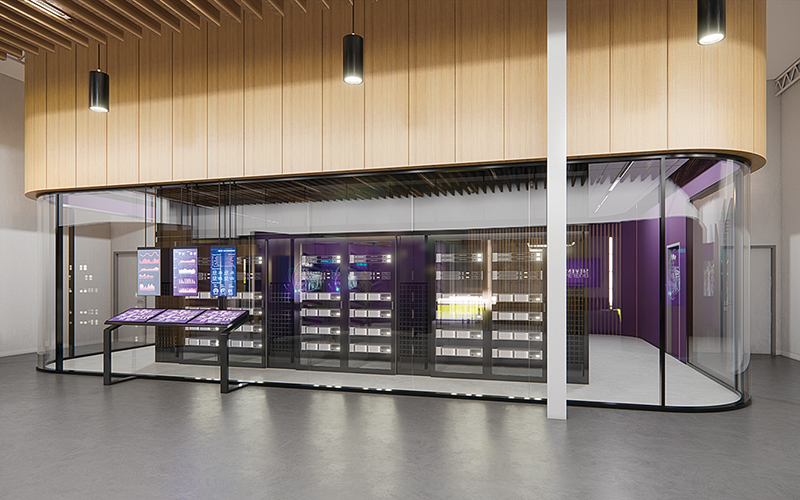
The expansion is grounded in core technologies, including gas turbines, generators and grid components, alongside solutions designed to help the energy delivery system adapt to changing needs, such as synchronous condensers, high-voltage power lines and innovative steam turbine applications. Investment is also going into emerging areas such as additive manufacturing, grid management tools and a new Grid AI lab in Orlando, Florida, where work with utilities focuses on building multifaceted grid models to optimise operation and improve resilience after weather events.
People powered
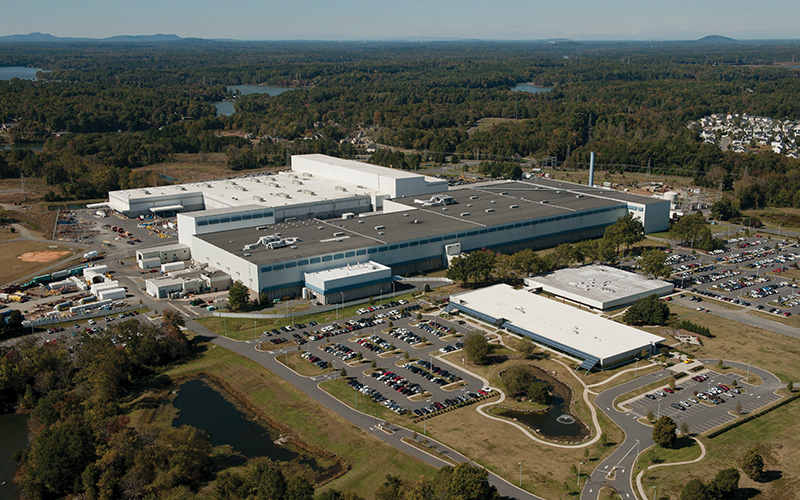
Alongside the physical infrastructure, Siemens Energy is bolstering research and development capabilities across multiple locations and establishing several training facilities. The goal is to fill 1,500 jobs – highly skilled manufacturing positions that require significant education and training.
Building that talent pipeline starts with the education system. Our involvement with technical schools and specialist educational institutions near our manufacturing sites helps us to shape curricula that foster the skills needed for the 21st-century energy economy. We provide internships and apprenticeships in our facilities; once hired, employees undergo further training to specialise in specific areas of our business.
There is a lot of uncertainty throughout the globe, but the fundamental direction remains clear: the demand for reliable and expanded power infrastructure is only increasing
This is a continual journey. I have worked at Siemens Energy for nearly 20 years, and there are still so many opportunities for me to learn and grow. It is common for employees to move between functions, receiving training to take on new responsibilities. This employee journey is a key reason our US$1bn investment focused mainly on brownfield expansion rather than greenfield construction. We value our relationships in these communities, the established talent pool and the human infrastructure that supports our ongoing success.
Confidence in the future
Our 12,000 employees in the US – and the many more whom we are looking to hire – are invested in the US’s energy future. And from where I sit, the future is bright in this country. Our regulatory atmosphere fosters a spirit of innovation that is spurring this once-in-a-generation growth, driven by the data centre buildout, the deployment of AI and the resurgence of US manufacturing. An ongoing, predictable and consistent policy and regulatory landscape is essential, not only for Siemens Energy but also for the broader industry. Regulatory stability allows companies to plan, invest and innovate with confidence – and we are. You can see that in our investment announcement and in our customers’ capital expenditure plans, which look out 10 or 20 years.
There is a lot of uncertainty throughout the globe and within pockets of the energy sector, but the fundamental direction remains clear: the demand for reliable and expanded power infrastructure is only increasing. As an energy equipment manufacturer, our unwavering mission is to deliver more energy to more people. While the strategies and pathways may evolve over time, the commitment to powering communities and supporting the US’s energy future continues to guide every decision we make.
Global trends
Gas fires up the grid
From the US to the Gulf, surging demand for baseload power is triggering a dramatic surge in gas-fired generation investment as grids scramble to keep pace.
Up until 2025, the number of new gas-fired power plants announced year on year had remained flat. However, that year saw a significant increase in the number of new announcements as demand for baseload power generation continued to rise. Two regions in particular have seen increased development momentum.
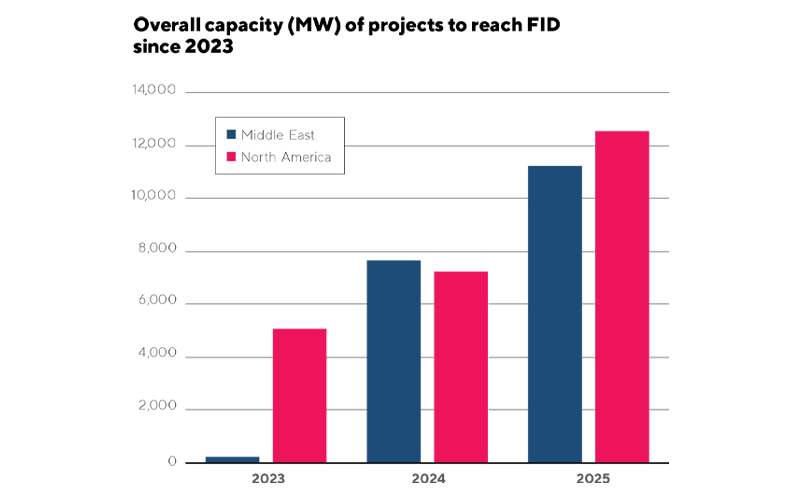
North America, specifically the US, has experienced a sizeable increase in the number of gas-fired power generation plants being announced. Alongside this, the amount of overall capacity (MW) reaching final investment decision (FID) has increased. In 2023, just over 5GW of projects were sanctioned; this rose to 12.5GW in 2025. Data centres, AI and the onshoring of manufacturing are the primary drivers for the increased demand for gas-fired power generation, and expectations are that capacity additions will continue to grow in the coming years.
In the Middle East, just 229MW of new gas-fired power generation reached a final investment decision in 2023. This rose significantly to 11.2GW in 2025, with 10.2GW located in Saudi Arabia. As part of Vision 2030, Saudi Arabia has mandated the cessation of oil-fired power generation to reduce domestic carbon emissions. Consequently, gas-fired plants and expanded renewable energy projects will replace these retiring oil-fired assets.
Want to know more about the current state of the power market? Contact: neil.golding@the-eic.com
Image credit | Siemens Energy

Follow us
Advertise
Free e-Newsletter