Building Africa's renewable energy future from the ground up
Africa’s energy deficit is growing. Closing the gap demands developers who understand local markets, can structure complex finance and have the patience to build for the long term.
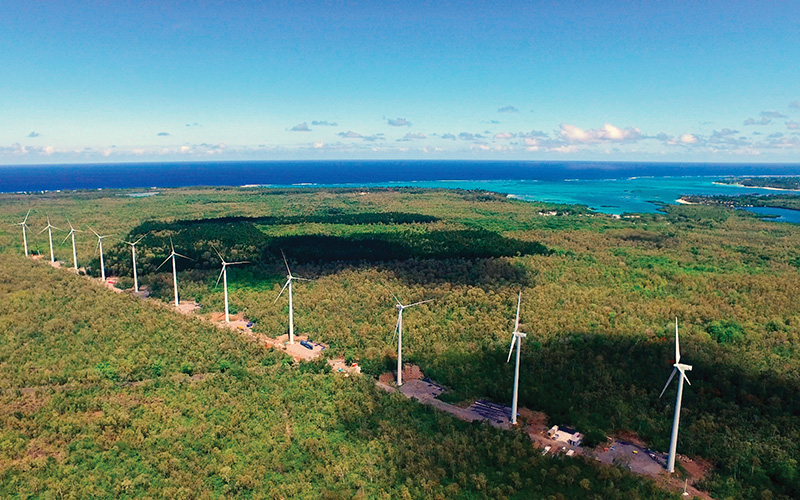
As Africa accelerates its energy transition, success requires combining technological innovation, local expertise and resilient business models. Leveraging more than a decade of experience, Qair is applying this strategy as a major player in the market, with 85MW already operational in four countries, 521MW and 264MWh of battery storage under construction or financing, and a solid 1.5GW in the development pipeline.
A multi-local, multi-technology approach
Closing the energy gap will require a diversified, region-specific approach, ensuring that solutions are tailored to local conditions and challenges. Developers must prioritise markets where regulatory frameworks, resource availability and energy demand converge, proving their ability to structure bankable projects and execute in complex environments. Aiming to establish a leading pan-African renewable energy footprint, Qair’s strategy centres on this approach, leveraging strong market positions in Mauritius and Tunisia while expanding into sub-Saharan Africa.
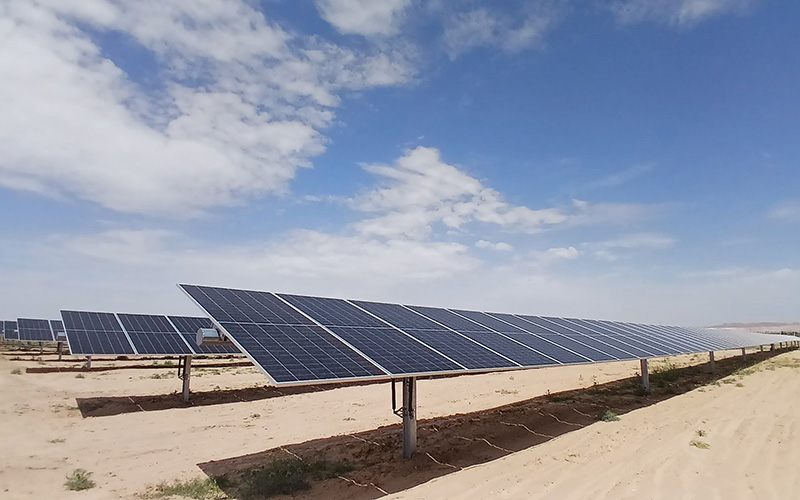
In North Africa, Tunisia and Morocco offer high levels of solar irradiation, maturing regulations and strong government commitment to renewables. Here, securing long-term power purchase agreements (PPAs), stable offtakers and access to long-maturity financing is crucial to reduce risk and enable large-scale deployment, as shown by projects such as the Feriana solar plants in Tunisia.
In West and Central Africa, acute energy deficits and reliance on expensive fossil fuels make renewables an economic necessity. In these markets, ensuring smooth renewable energy dispatch into the grid is crucial to improve energy access and reduce the need for costly grid upgrades. Qair is addressing it in Burkina Faso and Chad through its Gassi and Lamadji storage projects (30MW solar and 8MWh).
Meanwhile, in the Indian Ocean, Mauritius and Seychelles are high-potential markets that are driven by ambitious renewable targets (for example, Mauritius’ goal of reaching 60% renewables by 2035), supportive regulations and high energy costs. Innovative projects such as the Stor’Sun hybrid solar and BESS project in Mauritius (100MWp and 256MWh storage) and the Seysun Lagoon floating solar farm in Seychelles, address grid stability and land constraints, leveraging local expertise and partnerships to enhance viability and reduce intermittency risks.
Strategic partnerships: reducing risk and accelerating deployment
Government collaboration is essential; long-term PPAs with national utilities, such as 25-year agreements with the Tunisian Electricity and Gas Company, secure revenue streams and provide financial certainty. These collaborations reduce risk, mobilise capital and accelerate deployment. Qair’s ability to execute complex projects at scale is supported by strategic partnerships with governments, financiers and supply chains. In Burkina Faso, Qair’s Zano and Dedougou solar projects benefit from public-private partnership agreements, including government guarantees that mitigate risks such as offtaker creditworthiness.
Financier engagement is important, too. Partnerships with development finance institutions such as the African Development Bank Group, European Bank for Reconstruction and Development, European Investment Bank, FMO (a Dutch entrepreneurial development bank), International Finance Corporation and Proparco, as well as local banks, have mobilised US$250m for projects in six countries, with another US$200m expected soon. Qair Africa is also mobilising €150m to accelerate its strategy and finance construction over the next three years.
Supply chain synergies are the third factor. We manage engineering, procurement and construction (EPC) for small to mid-sized projects in markets where we have a strong local presence. For example, in Tunisia, the Feriana solar project saw major work packages contracted directly by the project company under Qair’s management. Moving forward, we plan to fully internalise EPC for larger projects where we have construction expertise and an execution track record, acting as the main contractor while subcontracting specialised tasks.
An autonomous platform
Qair Africa: a catalyst for efficiency and scalability
In markets with varying regulatory and operational challenges, leveraging local expertise while maintaining centralised oversight is critical.
To enhance operational efficiency, scalability and risk mitigation, developers must standardise processes from development to operations, ensuring consistency, quality and compliance with international standards. Furthermore, by pooling resources across regions, developers can significantly reduce costs and improve project economics.
At the core of Qair’s response to these industry demands is Qair Africa, an investment holding that consolidates its subsidiaries in Mauritius, Tunisia, Morocco, Burkina Faso, Chad and the Seychelles into a unified regionally autonomous platform. Through this structure, financing, procurement, construction management, and operation and maintenance expertise are shared, allowing even smaller projects to benefit from economies of scale.
Successfully navigating Africa’s energy landscape also requires rapid responses to market opportunities, optimised resource allocation and more predictable project delivery. To achieve this, the goal for developers should be to manage the entire value chain – from development and financing to construction and operations – with minimal external support. Qair’s African platform is specifically designed to function as this type of autonomous organisation, enabling the efficient delivery of complex projects.
Global trends
Beyond Africa: a world of renewable opportunity
Record renewable capacity additions and surging global investment are transforming the energy landscape
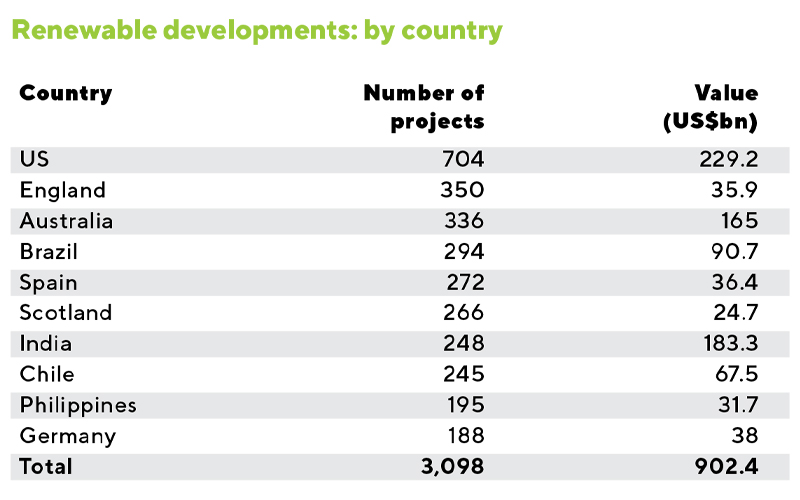
In 2025 alone, around 692GW of new renewable capacity was added, pushing total capacity to nearly half of global electricity supply. Currently, EIC DataStream is tracking 7,167 renewable projects globally across all sectors, with 12% coming from offshore wind, 26% onshore wind and 47% solar. Solar is the cheapest form of renewable electricity and remains the dominant driver, accounting for the majority of new installations and expected to deliver nearly 80% of total capacity growth through 2030; onshore wind follows behind. Offshore wind continues to expand, while emerging technologies such as energy storage are gaining importance in supporting grid flexibility with a major increase in co-location.
Global renewable capacity is expected to more than double by 2030, driven by strong policy support such as Contracts for Difference schemes in the UK and other countries, the EU’s Fit for 55 scheme, falling technology costs, and energy security concerns caused by war and conflict. Growth is particularly concentrated in Asia, with China and India leading solar and wind deployment, while Europe accelerates offshore wind. The US faces policy-related uncertainty but boasts one of the highest markets in project pipeline. The sector continues to attract significant investment, with renewables playing a central role in decarbonisation, improving energy security and reducing exposure to volatile fossil fuel markets worldwide.
Regulatory and grid challenges: ensuring long-term viability
Consistent regulation is crucial to attract investment and guarantee project viability. Stable legal, tax and foreign exchange policies are fundamental to project performance over their lifetime. Challenges include overcoming regulatory barriers by streamlining administrative approvals and foreign exchange processes to accelerate project implementation.
Grid development is another priority, requiring investment in infrastructure and smart solutions to integrate new generation capacity. Hybrid storage projects such as Stor’Sun are critical to overcome grid instability and ensure seamless renewable energy integration.
By addressing regulatory, financial and operational challenges, Qair is advancing sustainable energy and driving inclusive growth across Africa. Our integrated platform enables us to scale up our operations, deliver effective projects and contribute to Africa’s long-term energy security.
Want to know more about the current state of the renewables market? Contact: nabil.ahmed@the-eic.com
By Abdoulaye TOURÉ, CFO at Qair Africa
Image credit | Qair

Follow us
Advertise
Free e-Newsletter