Resilience, recovery and the road to 2027
Despite months of geopolitical turbulence, the Middle East’s energy sector has proved resilient. As investment holds firm and reconstruction looms, the region is shifting from managing uncertainty to shaping the next phase of global energy growth.
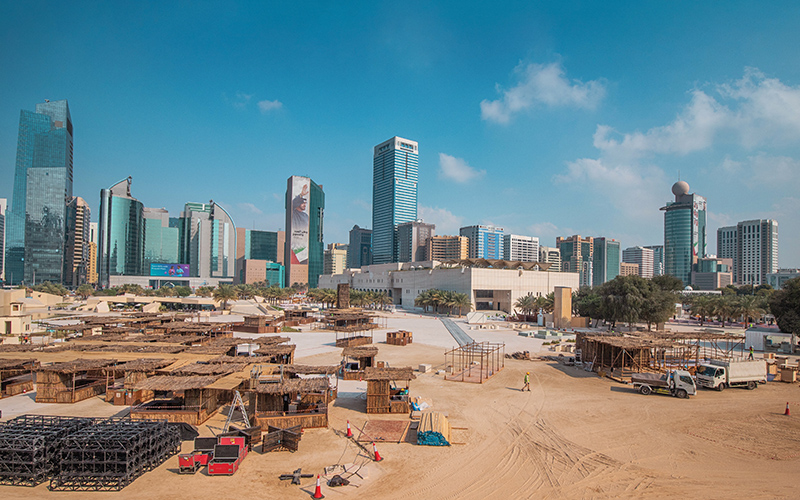
The past few months have once again demonstrated the remarkable resilience of the Middle East’s energy sector. While geopolitical tensions have understandably dominated the headlines and created periods of uncertainty, they have also reinforced a fundamental truth: the region remains central to global energy security and is one of the world’s most significant destinations for energy investment.
For companies across the energy supply chain, the conversation is already starting to shift from managing uncertainty to identifying opportunities. For those of us who live and work in the region, resilience is nothing new. Businesses have learned to adapt quickly, stay agile and continue to deliver projects even in the most challenging circumstances. That ability has once again come to the fore and should give the industry confidence as we look towards the next phase of growth.
Investment never stopped
One of the biggest misconceptions during periods of geopolitical uncertainty is that investment simply grinds to a halt. The reality on the ground tells a very different story.
Across the Gulf Cooperation Council (GCC), operators have continued to progress major capital programmes, engineering, procurement and construction contracts continue to be awarded, and investment in both traditional and low-carbon energy projects remains robust. National energy strategies, industrial diversification programmes and localisation initiatives have continued at pace, reinforcing the region’s commitment to long-term economic growth.
Understandably, some companies temporarily reviewed their travel policies and project deployment, but very few fundamentally changed their long-term commitment to the Middle East. If anything, geopolitical shifts have proved that the region remains strategically important to the global energy system.
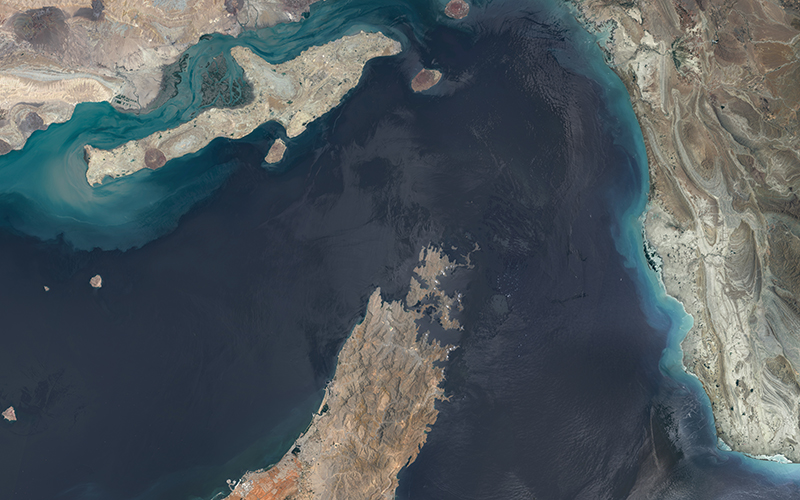
The situation in Strait of Hormuz reminded the world that energy security and supply chain resilience are intrinsically linked. While alternative export routes are being explored, the Gulf’s infrastructure and logistics network remains irreplaceable for global energy markets. Recent events have highlighted just how dependent the world is on the region’s energy infrastructure and export capability, reinforcing the need for continued investment in resilient supply chains and strategic energy assets.
National priorities take centre stage
As we move into the second half of 2026, I believe we will continue to see strong cooperation across the GCC, particularly around regional energy security, infrastructure development and industrial collaboration. However, there will also be a growing emphasis on national priorities.
The Middle East is not simply recovering from recent events; it is positioning itself for its next chapter
Countries across the region are rightly focused on maximising domestic economic value. Local content programmes continue to evolve, manufacturing capability is expanding, and In-Country Value policies are becoming more sophisticated. At the same time, sovereign wealth funds are playing an increasingly important role in supporting economic recovery, accelerating diversification and building resilience against future shocks. Rather than reacting to disruption, governments are using these strategic investment vehicles to strengthen industrial capability, develop critical infrastructure and position their economies for long-term growth.
For international companies, success will increasingly depend not only on technical capability but also on demonstrating a genuine long-term commitment to each market. Investing in local partnerships, developing local workforces and supporting national economic ambitions will become even more important in the coming years.
Reconstruction: the next great pipeline
While much attention has rightly focused on the geopolitical situation, the industry must also start to look beyond the current headlines. History has consistently shown that when conflict subsides, reconstruction follows.
Across parts of the wider Middle East, work has already commenced on assessing and rehabilitating damaged infrastructure. In the coming years, reconstruction is likely to create one of the largest project pipelines the region has experienced in a generation. However, this will not just involve rebuilding what already existed – it presents an opportunity to develop smarter, more resilient and more sustainable energy systems, integrating modern technologies, digital infrastructure, renewable energy and better grid resilience from the outset.
For the energy supply chain, the challenge will be to identify where capability gaps exist, understand the complexities of these markets and position early to support this next development phase.
Oil prices and the long view
Recent oil price fluctuation has naturally prompted questions on future investment, but history has consistently shown that the GCC takes a far longer-term view than short-term commodity price movements. National oil companies continue to invest based on strategic production capacity and long-term demand fundamentals, rather than reacting to temporary oil price fluctuations. The UAE’s decision to move beyond traditional OPEC production constraints provides additional flexibility to maximise production where market conditions allow, while continuing to invest heavily in the infrastructure needed to support future growth. Together with Saudi Arabia, Qatar and Oman, the UAE continues to demonstrate confidence in its long-term role in the global energy mix.
Cautious optimism on the ground
Speaking with EIC members across the region over recent weeks, one message has been remarkably consistent: businesses are cautious but optimistic. Travel has largely returned to normal, tendering activity remains healthy and companies are, once again, focusing on growth rather than uncertainty. Relationships continue to strengthen, with collaboration across governments, operators, contractors and suppliers remaining one of the regional energy sector’s defining characteristics.

The road to 2027
Looking ahead to 2027, I believe we will see continued acceleration across the GCC. Investment will stay strong, energy diversification will continue, industrial capability will expand and supply chain resilience will remain a strategic priority. At the same time, reconstruction activity across the wider region will start to create entirely new opportunities for those companies that are prepared to invest early and build long-term partnerships.
The Middle East has once again shown that it is not just responding to global events – increasingly, it is shaping them. For the global energy supply chain, that should be encouraging.
The fundamentals remain exceptionally strong. Governments continue to invest with confidence, operators continue to advance ambitious capital programmes and the commitment to building resilient, diversified economies has never been clearer.
The Middle East is not simply recovering from recent events; it is positioning itself for its next chapter. For companies prepared to embrace the opportunities ahead, it promises to be one of the most exciting periods in the region’s history.
By Ryan McPherson, Regional Director, EIC Middle East, Africa, Russia & CIS
Image credit | Getty | Shutterstock

Follow us
Advertise
Free e-Newsletter