Sir Ian Wood: a legacy of humanity and leadership in the energy sector
Sir Ian Wood, the industrialist who built Wood Group into a global energy powerhouse and reshaped UK offshore safety and policy, died on 26 July at his home in Aberdeen, aged 84.
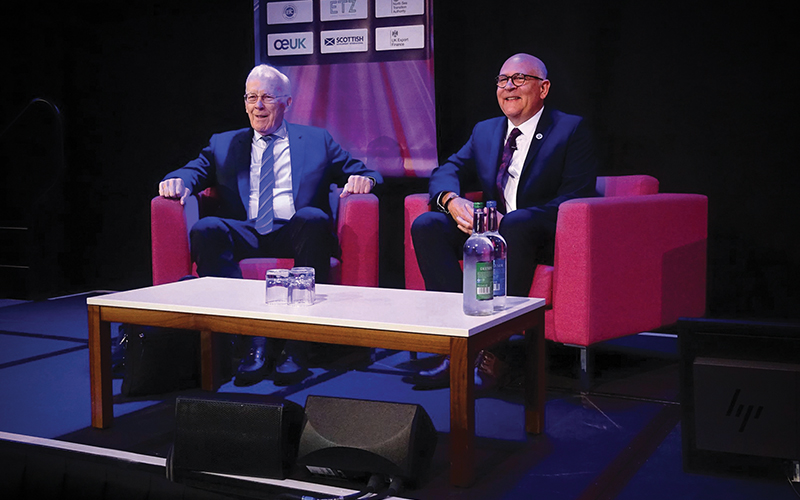
The energy sector we know today would be very different without the vision, leadership and persistence of Sir Ian Wood. On 26 July, the UK oil and gas industry lost one of its most defining figures and respected leaders, who passed away peacefully at his home in Aberdeen at the age of 84. While history will remember him as the industrialist who transformed a family fishing boat repair yard into a global engineering powerhouse, those closest to him will remember his kindness and unwavering commitment to his family. For the executives and energy leaders reading this article, his passing represents the loss of a visionary whose influence shaped both our industry and communities. We reflect on his life with a profound sense of appreciation for a man who always understood that behind every megawatt, every subsea tie-back and every barrel of oil, there are people.
Sir Ian understood that true accountability could not be delegated
A career built on foresight
Sir Ian’s professional journey was extraordinary yet deeply rooted in his home city. Born in Aberdeen in 1942, he graduated from the University of Aberdeen with a first-class honours degree in psychology before joining the family business in 1964. By 1967, he had become managing director. Recognising the potential of the early North Sea oil and gas sector long before many of his peers, he shifted the company’s focus to support offshore development. When he retired as chairman in 2012, the Wood Group employed more than 42,000 people across over 50 countries.
Philanthropy and legacy
True to his belief in helping people help themselves, his investments focused on tackling social and economic inequality
His impact spans from empowering 80,000 smallholder tea farmers in East Africa to supporting grassroots charities in Scotland. Through the Youth and Philanthropy Initiative, Scottish pupils learn to evaluate charities and secure £3,000 grants for them, emulating Sir Ian’s core values of tolerant and caring citizenship. He believed that good fortune in life carries a responsibility to help others realise their own potential.
Sir Ian is survived by his wife, three sons and seven grandchildren. For those of us navigating the future of UK energy, he leaves behind an important masterclass in leadership. “You can lead by your heart, but your head must come into it too!” he advised. Sir Ian proved that commercial success, energy security and profound philanthropy are not competing interests, but complementary ones. We will miss his presence, but his unwavering belief in the capability of our people and our supply chain remains the benchmark for everything we do next.
Piper Alpha and the safety legacy
His commitment to the people who built the industry was never more evident than during the Piper Alpha tragedy of 1988. The disaster claimed the lives of 167 workers, including 39 from the Wood Group. Sir Ian understood that true accountability could not be delegated. He stepped away from the corporate response to personally visit the grieving families of those who died – and then became an advocate for improving offshore safety across the supply chain. This was leadership grounded in the reality that an industry’s greatest operational responsibility is the protection of its workforce.
Shaping the energy transition
Beyond his own enterprise, Sir Ian took on the responsibility of shaping the broader UK energy landscape. He led the independent Wood Review, commissioned by the UK government in 2013, which resulted in important regulatory reforms and the creation of today’s North Sea Transition Authority. Even after stepping down from the Wood Group, he turned his focus to the next great challenge: securing the supply chain’s role in a low-carbon future. He championed the transition to renewable energy while advocating for the continued drilling required in the North Sea to secure supply. His forward-looking vision directly led to the establishment of the Energy Transition Zone in 2021.
Reflection
Inspiring and humble leader
“Sir Ian was the most inspiring and humble leader I have ever worked with, inspiring and challenging in equal measures. He drove his businesses with, as he used to say, one foot on the accelerator and one foot on the brake, using subtle signals like sharing a biscuit with you or asking your advice on something, when clearly he knew much more than me.
“I had the privilege of working for Sir Ian for many years, and latterly of interviewing him many times as he supported Aberdeen Energy Exports Conference. I will miss his sharp wit, unwavering commitment to honesty and pragmatic policy, and his belief in community and teamwork. He was never arrogant, instead being eager to learn, generous and thoughtful.
“Leaders like Sir Ian are few and far between, and all of us who knew him will miss him hugely. Indeed, those of you who did not know him personally will still miss the tireless work that he did behind the scenes to make working in North East Scotland’s world-class energy industry more productive, more embedded in the people and more profitable for its businesses. His voice and impact garnered respect; people always stopped and listened to him when he spoke. I fear we will miss the real influence he had more than we can imagine in the months and years to come.”
Stuart Broadley, CEO, EIC
Image credit | EIC


Follow us
Advertise
Free e-Newsletter