View from the top: Steve Nicol, Chief Operating Officer at Wood
Steve Nicol, COO of Wood’s Operations business, talks to Energy Focus about the company’s focused growth strategy under Sidara ownership, the return of pragmatism to the energy debate, and the opportunities emerging across global energy and materials markets.
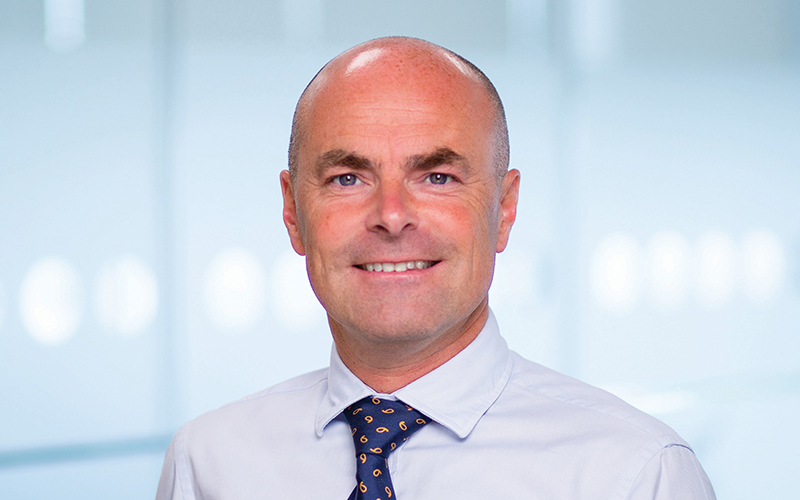
At the top: Steve Nicol
Steve has been at Wood for 25 years and joined its leadership team in 2023. He leads its Operations business, which delivers asset management solutions across the asset lifecycle. Specialising in operations, maintenance, modifications and brownfield engineering, it helps clients to optimise performance, extend asset life and reduce emissions via practical decarbonisation solutions. Steve is also Executive Sponsor of Wood’s Developing Professionals Network, championing workforce development.
Wood has been through significant restructuring and divestments in recent years. What does the company’s strategy look like now, and what are its core activities today?
The strategy today is about focus, discipline and growth. Wood is firmly centred on the energy and materials markets, where we have deep technical expertise and long-standing client relationships. Recent divestments have strengthened that focus, allowing us to focus on the markets and capabilities that matter most to our clients and long-term growth ambitions.
We’re not trying to be all things to all people; we’re focused on the areas where we can create the greatest value. At our core, we’re a consulting, engineering and operations company, helping clients to solve complex challenges, improve performance and navigate an evolving energy landscape.
Which regions will offer the biggest growth opportunities over the next one to three years?
The scale and pace of investment across the Middle East is creating significant opportunities to support clients across the full asset lifecycle, from consulting and engineering to operations. The Americas is also an important growth market, supported by continued investment in energy and industrial infrastructure.
The UK remains important, particularly as operators focus on getting more value from existing assets through life extension, operational efficiency and late-life asset management.
Ultimately, growth follows investment confidence. Today, some of the strongest investment signals are coming from the Middle East, while the UK continues to offer attractive opportunities where clients are focused on maximising the value of existing infrastructure.
We’re not trying to be all things to all people; we’re focused on the areas where we can create the greatest value
Which energy sectors will drive the most profitable growth in the next one to three years?
One of the biggest shifts is the return of pragmatism to the energy debate. Energy security, affordability and decarbonisation all matter – and no single source can solve that challenge on its own. I therefore expect investment in oil and gas to remain resilient over the long-term, particularly where it improves energy security and reduces reliance on imports. That makes oil and gas the biggest near-term growth market for us, while renewables, electrification and other lower-carbon technologies grow alongside it.
At the same time, clients are increasingly looking for partners rather than suppliers. We’re seeing growing interest in alliance models that align objectives, reward performance and create shared value over the life of an asset.
Sidara is Wood’s new owner: how has this changed Wood, in terms of corporate culture, access to finance, and vision?
The biggest difference is confidence. When people know where the business is heading and have a clear long-term owner behind them, it changes the conversation. We can focus our energy on serving clients, developing our people and pursuing growth opportunities, rather than managing uncertainty.
We are proud to be part of the Sidara group. Sidara’s backing gives us greater stability, stronger financial foundations and access to a wider global network with complementary capabilities. But what excites me most is the opportunity to accelerate growth while retaining everything that makes Wood successful: our people, our technical expertise and our client relationships.
Importantly, Wood remains Wood, with the same focus on delivering safe, reliable and sustainable solutions for our clients.
Wood committed heavily to the green agenda over the past five years: is the plan to now refocus back to oil and gas?
I don’t accept the premise that it’s one or the other. Energy security, affordability and sustainability all matter, and balancing those priorities requires investment across the entire energy mix – not in one source alone.
Our focus on oil and gas has never gone away because our clients still need our expertise to deliver safe, reliable and affordable energy. At the same time, we’re helping them to reduce emissions and develop lower-carbon solutions.
Our role is actually quite simple – helping clients to succeed in an increasingly complex energy landscape. That means supporting today’s energy systems while building tomorrow’s.
Some of the strongest investment signals are coming from the Middle East, while the UK continues to offer attractive opportunities
Has the conversation around energy sovereignty changed the type of projects that Wood is being asked to deliver?
Not as much as some might expect. Energy sovereignty has become a bigger part of the political debate, but our clients’ priorities remain largely unchanged: safe operations, reliable production and long-term asset performance. The conversation may have changed, but the fundamentals of what our clients need from us are largely the same.
How has the US-Israel war with Iran changed the attractiveness of the Middle east for investment?
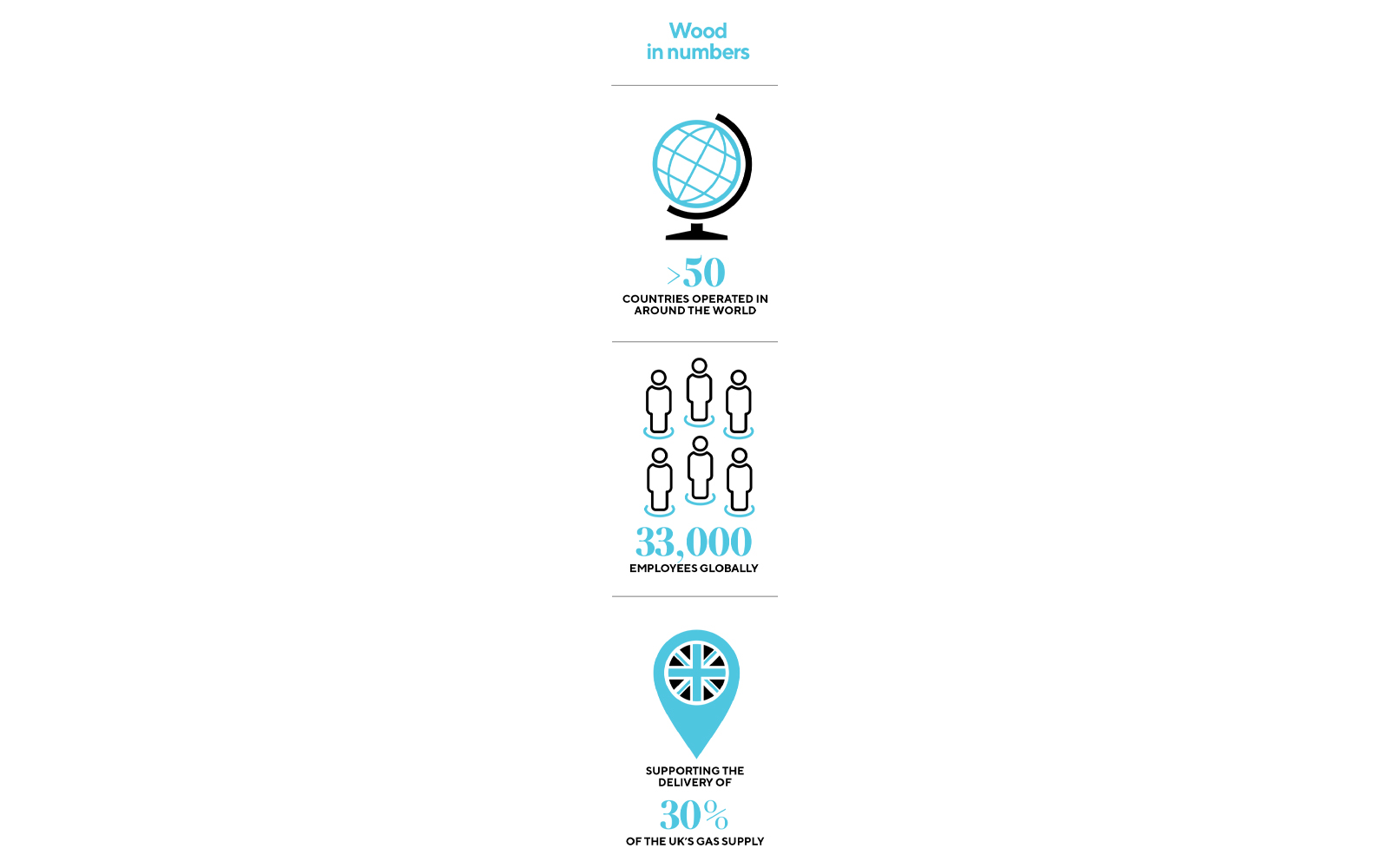
Geopolitical tensions inevitably create uncertainty, and our priority is always the safety of our people and supporting our clients. With more than 3,000 people across the region, that’s something we take extremely seriously.
The Middle East continues to attract significant investment, underpinned by long-term energy demand and ambitious growth plans. Our opportunity pipeline remains strong and we continue to see significant opportunities across the region.
Do you face supply chain or skill constraints? If so, in what areas, and how is this affecting your business and your ability to scale up, diversify and retain key staff?
Talent and supply chain capacity remain challenges across the industry, particularly as competition for experienced technical specialists continues to grow. For Wood, that means we have to work hard to attract, develop and retain the expertise that sets us apart. That’s why we’re investing in early careers, skills development and the next generation of engineers and specialists – spanning both traditional engineering disciplines and emerging digital, data and AI-related capabilities.
Digital skills, data and AI are increasingly important, but our long-term success will continue to depend on human judgement, engineering expertise and problem-solving capability. If we want a resilient industry in 10, 20 or or 50 years’ time, we need to invest in and nurture that capability today.
Many companies in the energy sector are exploring how AI will transform their business but have yet to see the benefits in their top and bottom line. What is Wood’s approach to AI?
AI is only valuable when supported by trusted data, engineering expertise and operational execution. We combine all three to deliver better outcomes for clients. AI can identify patterns, but it’s human judgement and engineering expertise that determine what should happen next.
For us, the opportunity with AI is to give our experts better information and insights so that they can make better decisions, faster. That’s how we turn insight into action and protect value across the asset lifecycle.
How disruptive is geopolitical uncertainty to your planning, investments and growth?
If I take the UK as an example, frequent changes in policy and direction can make it harder to attract capital, build long-term capability and retain critical skills. Capital and talent are mobile. When confidence falls, both tend to find opportunities elsewhere. If it affects our clients, it affects us. That’s why consistency and clarity are so important to industry’s long-term health.
Is the UK still a profitable market for Wood?
Absolutely. The UK remains a strategically important market and continues to offer significant opportunities. It’s our home market, where our story began, and remains central to our future. We’ve grown alongside our clients and followed them around the world, but our commitment to the UK remains unchanged. The North Sea is one of the world’s most technically demanding operating environments, and our expertise is well aligned with our clients’ needs.
Is the UK still a good place in which to invest, with its high costs of energy and of doing business?
Yes. The UK remains an attractive place to invest because of its people, capability and track record of delivery. The North Sea has earned a global reputation for technical excellence, supported by a highly skilled workforce and a strong supply chain. The question isn’t whether the UK has the capability – it does. The challenge is ensuring that we continue to invest in it. Without sustained investment, we risk losing not only our competitive advantage, but also the skills, knowledge and experience that have made the region successful.
What’s one piece of conventional industry wisdom that you’ve come to disagree with during your career?
That stability, preserving consistency and prioritising permanence are the safest paths to success. The most successful people I’ve worked with in my career have been curious, adaptable and willing to challenge the status quo. In a constantly evolving industry, standing still is rarely an option.
Whether it’s new technologies, new business models or changing client expectations, those who embrace change tend to create opportunities. Those who resist it often get left behind.

Follow us
Advertise
Free e-Newsletter