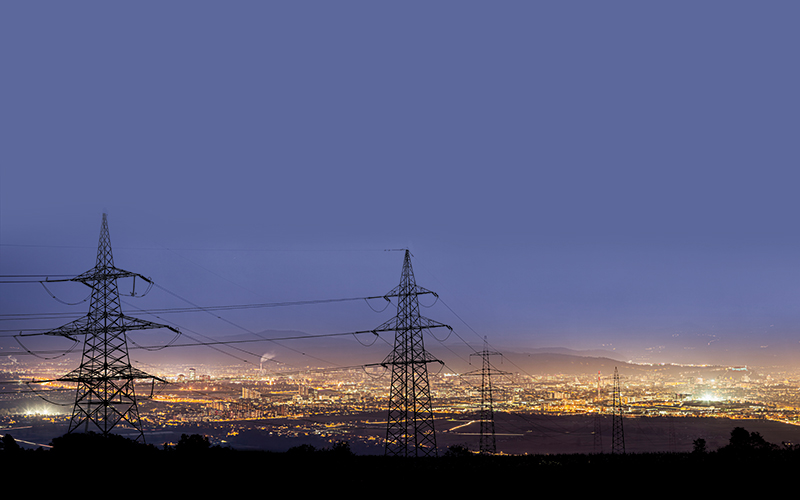
Can the North Sea become a net-zero basin by 2050 while maintaining energy security?
Innovative thinking is needed on the path to decarbonising the offshore oil and gas sector, writes Wärtsilä’s Tim Burnett

Can the North Sea become a net-zero basin by 2050 while maintaining energy security?
Innovative thinking is needed on the path to decarbonising the offshore oil and gas sector, writes Wärtsilä’s Tim Burnett

The quest to achieve net-zero greenhouse gas emissions while also ensuring energy security for the UK is our biggest challenge, but one we believe the North Sea Transition Deal (NSTD) will help us
In the 12 months since the landmark North Sea Transition Deal was signed, the UK oil and gas industry has made strong progress towards delivering on its ambitious commitments, says Mike Tholen at Offshore Energies UK

In one day, the recently announced ScotWind offshore wind leasing round added a pipeline equivalent to double that of all the UK offshore wind currently in operation.
The ScotWind tender results mark the commercial breakthrough of floating offshore wind, but we need significant and sustained investment in infrastructure and supply chain capability if the UK is to deliver the technology at scale and cement itself as a world leader, says Professor Sir Jim McDonald FREng FRSE, President of the Royal Academy of Engineering

California may be best known in the energy industry for its trailblazing solar market, but the landmark Joint Agency Senate Bill 100 report (SB100), published in March 2021, concluded that Californ
With consistent winds, vast coastlines and a commitment to 100% clean energy, California is ripe to establish itself as a global leader in floating offshore wind power, writes Paula Major, Chair of Offshore Wind California, and VP of Offshore Wind at US Mainstream Renewable Power

The energy landscape of North America is growing into a diverse hotspot for renewable energy.
Discover new renewable energy opportunities in North America with the help of team EIC Houston

One of the few solutions to tackle emissions from heavy industry is CCS. Currently, CCS is the fastest way to substantially reduce CO2 emissions at a relatively low cost.
The Netherlands has clear climate objectives: to reduce greenhouse gas emissions by 55% below 1990 levels by 2030, and to be carbon neutral by 2050.

When it is operational in 2024 it will be the first-ever cross-border open-source CO2 transport and storage infrastructure network, and will offer companies across Europe the opportunity to store t
Northern Lights is responsible for developing and operating CO2 transport and storage facilities, open to third parties, as part of the Norwegian government’s full-scale CCS Longship project.

The region has historically been the UK’s engine room and is currently responsible for almost 50% of the UK’s industrial cluster emissions.
After being selected on Track-1 of the government’s cluster sequencing process in October 2021, effectively receiving the green light to become operational in the mid-2020s, the East Coast Cluster (ECC) stands ready to decarbonise industry across Teesside and the Humber. The cluster will protect thousands of jobs and establish the region as a globally competitive climate-friendly hub for industry and innovation.

To reach net zero, the International Energy Agency estimates that 7.6 gigatonnes of CO2 will need to be captured and stored annually by 2050 using carbon capture and storage (CCS).
Industrial clusters are critical to getting to net zero. While the development of carbon capture, utilisation and storage (CCUS) so far has been slow, stronger climate targets and investment incentives are injecting new momentum into the technology. Energy Focus spotlights the development of the three most advanced CCUS hubs around the North Sea in Europe, with an introduction by James Richardson, Commercial Director, UK Industrial Decarbonisation at Baker Hughes

While 2021 once again proved that predictions must come with disclaimers, thanks to even more unanticipated events, there is at least some cautious optimism in 2022.
With a spike in demand and higher prices providing energy companies with the means for expansion across both new and traditional energy segments, Jonathan Dyble asks: is the current energy landscape equipped to support major growth ambitions?

Follow us
Advertise
Free e-Newsletter